The Hope Rehab Center

Category Family Support Program

Family Support Program: Helping Families Navigate Addiction Recovery Together

Family Support Program: Helping Families Navigate Addiction Recovery Together

Addiction affects more than the person who uses alcohol or drugs. It can change family relationships, create emotional stress, disrupt household routines, and make communication difficult. A well-structured Family Support Program gives relatives an opportunity to understand addiction, learn healthier communication skills, and support recovery without taking control of the person’s treatment.

Family involvement doesn’t mean accepting harmful behavior or placing responsibility for recovery on relatives. Instead, it focuses on education, compassion, healthy boundaries, and practical support. At The Hope Rehabilitation Center Islamabad, Pakistan, family support can be included in an individualized recovery plan when clinically appropriate.

What Is a Family Support Program?

A Family Support Program is a structured form of education and counseling designed to help families affected by addiction or related mental health concerns.

Depending on individual needs, it may involve:

  • Family counseling
  • Addiction education
  • Communication guidance
  • Boundary-setting
  • Relapse-prevention education
  • Caregiver support
  • Recovery planning
  • Emotional support

The purpose is to create a healthier understanding of addiction while helping family members respond to difficult situations in constructive ways.

Why Family Support Matters During Recovery

When someone struggles with addiction, relatives may experience worry, anger, confusion, guilt, or frustration. They may also be unsure whether they are helping or unintentionally making the situation worse.

Education can change this. Understanding addiction as a complex health condition can reduce stigma and help families focus on practical steps.

Supportive family involvement may contribute to:

  • Better communication
  • Greater understanding of treatment
  • Healthier household boundaries
  • Increased awareness of relapse warning signs
  • Emotional encouragement
  • More consistent recovery routines

Family participation is not suitable or necessary in every situation. Treatment professionals should consider privacy, safety, family dynamics, and the individual’s wishes.

Understanding Addiction Without Blame

Addiction can involve biological, psychological, social, and environmental factors. It isn’t adequately explained by a lack of discipline or a simple choice.

Family members sometimes ask, “Why don’t they just stop?” The reality is that repeated substance use can lead to changes in reward, motivation, and stress systems, while emotional and environmental factors may also reinforce use.

Learning about these factors can help relatives replace blame with informed support.

At The Hope Rehabilitation Center Islamabad, Pakistan, family education can help relatives understand the recovery process while maintaining realistic expectations.

Family Counseling and Communication
Family Support Program: Helping Families Navigate Addiction Recovery Together

Addiction can create communication patterns that become difficult to break. Conversations may quickly turn into arguments, accusations, or silence.

Family counseling can provide a structured environment for discussing these issues.

Families may learn to:

  • Listen actively
  • Express concerns calmly
  • Avoid unnecessary criticism
  • Discuss expectations clearly
  • Respect privacy
  • Handle disagreements more constructively

Improved communication doesn’t mean that every disagreement disappears. Rather, it can provide healthier ways to manage difficult conversations.

Healthy Boundaries Are Part of Family Support

Being supportive doesn’t require family members to tolerate unsafe or harmful behavior.

Healthy boundaries may include:

  • Refusing to provide money for substances
  • Protecting household finances
  • Establishing clear expectations
  • Avoiding arguments when someone is intoxicated
  • Encouraging professional treatment
  • Protecting children and vulnerable family members

Boundaries work best when they are communicated clearly and consistently rather than used as punishment.

Avoiding Enabling Behaviors

Families sometimes try to protect their loved one from the consequences of addiction. Although the intention may be caring, certain behaviors can unintentionally allow the problem to continue.

Examples may include repeatedly making excuses for missed responsibilities, hiding substance use from others, or providing resources that directly support continued use.

A family support program can help relatives understand the difference between supporting recovery and enabling addiction.

Family Support During Rehabilitation

During rehabilitation, family participation may include educational sessions, counseling, treatment discussions, or recovery-planning meetings when appropriate.

Families may learn about:

  • Withdrawal and recovery
  • Cravings and triggers
  • Relapse warning signs
  • Treatment expectations
  • Communication strategies
  • Aftercare planning

The individual’s confidentiality should remain important throughout this process. Information shared with family should be handled according to appropriate professional and ethical standards.

Supporting Recovery After Treatment

Leaving a rehabilitation program can be an important transition. Returning home may bring familiar routines and triggers, making continued family support valuable.

Relatives can encourage:

  • Healthy daily routines
  • Continued counseling
  • Treatment follow-up
  • Positive activities
  • Adequate rest and sleep
  • Open, respectful communication

At the same time, families should avoid demanding immediate or perfect recovery. Progress can take time, and treatment plans may need adjustment.

Mental Health and Family Well-Being

Addiction may occur alongside depression, anxiety, trauma, or other mental health conditions. These concerns can affect both the individual and the family.

If someone experiences significant mood changes, severe anxiety, psychotic symptoms, or thoughts of self-harm, professional mental health assessment is important.

Family members should also pay attention to their own well-being. Chronic stress can affect sleep, mood, physical health, and relationships.

Seeking counseling or other appropriate support for themselves can help caregivers maintain healthier boundaries and cope with the demands of supporting a loved one.

Relapse Prevention and Family Support

Relapse prevention is another important area where families can contribute.

Relatives may help by recognizing changes such as:

  • Increasing isolation
  • Returning to substance-using social circles
  • Missing treatment appointments
  • Significant mood changes
  • Persistent cravings
  • Romanticizing previous substance use

These signs don’t necessarily mean relapse will occur. They can, however, provide an opportunity for an individual and their treatment team to review the recovery plan.

A relapse should be approached as a serious health concern requiring reassessment and support, not as a reason for shame.

How The Hope Rehabilitation Center Supports Families

The Hope Rehabilitation Center Islamabad, Pakistan recognizes that addiction recovery can involve the entire family. Where appropriate, family-focused education and counseling can complement individual treatment.

The exact form of support should depend on the person’s clinical needs, family circumstances, privacy considerations, and recovery goals. A professional approach should prioritize safety, dignity, informed decision-making, and realistic expectations.

Frequently Asked Questions

1. What is a Family Support Program?

A Family Support Program provides education, counseling, and practical guidance to relatives affected by addiction or related mental health concerns. It helps families develop healthier communication and boundaries.

2. Should every family participate in addiction treatment?

Not necessarily. Family involvement depends on the individual’s treatment needs, safety, family relationships, privacy, and professional recommendations.

3. How can families support someone recovering from addiction?

Families can encourage professional care, communicate respectfully, maintain healthy boundaries, support positive routines, and avoid behaviors that unintentionally enable substance use.

4. Can family counseling help repair relationships?

Family counseling can provide a structured environment for addressing communication problems and past difficulties. Rebuilding trust generally takes time and consistent effort.

5. Do family members need support themselves?

Yes. Caring for someone affected by addiction can be emotionally demanding. Counseling, education, and appropriate support can help relatives protect their own well-being while maintaining healthy boundaries.

Conclusion

A Family Support Program can help relatives understand addiction and become a more informed source of support during recovery. Education, family counseling, healthy boundaries, and effective communication can make it easier for families to navigate the challenges that addiction may create.

At The Hope Rehabilitation Center Islamabad, Pakistan, family support can complement individualized rehabilitation and aftercare when clinically appropriate. The focus should remain on compassionate care, realistic expectations, privacy, safety, and practical recovery support.
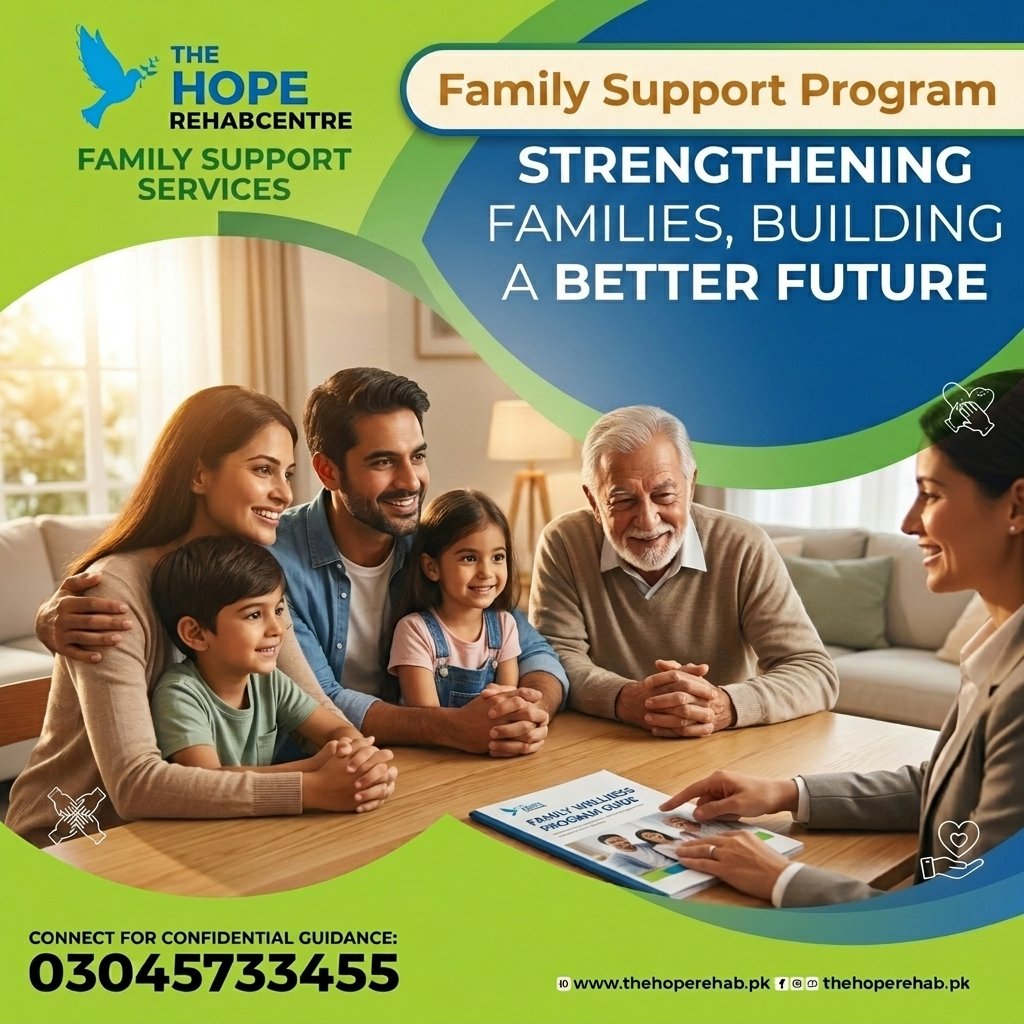
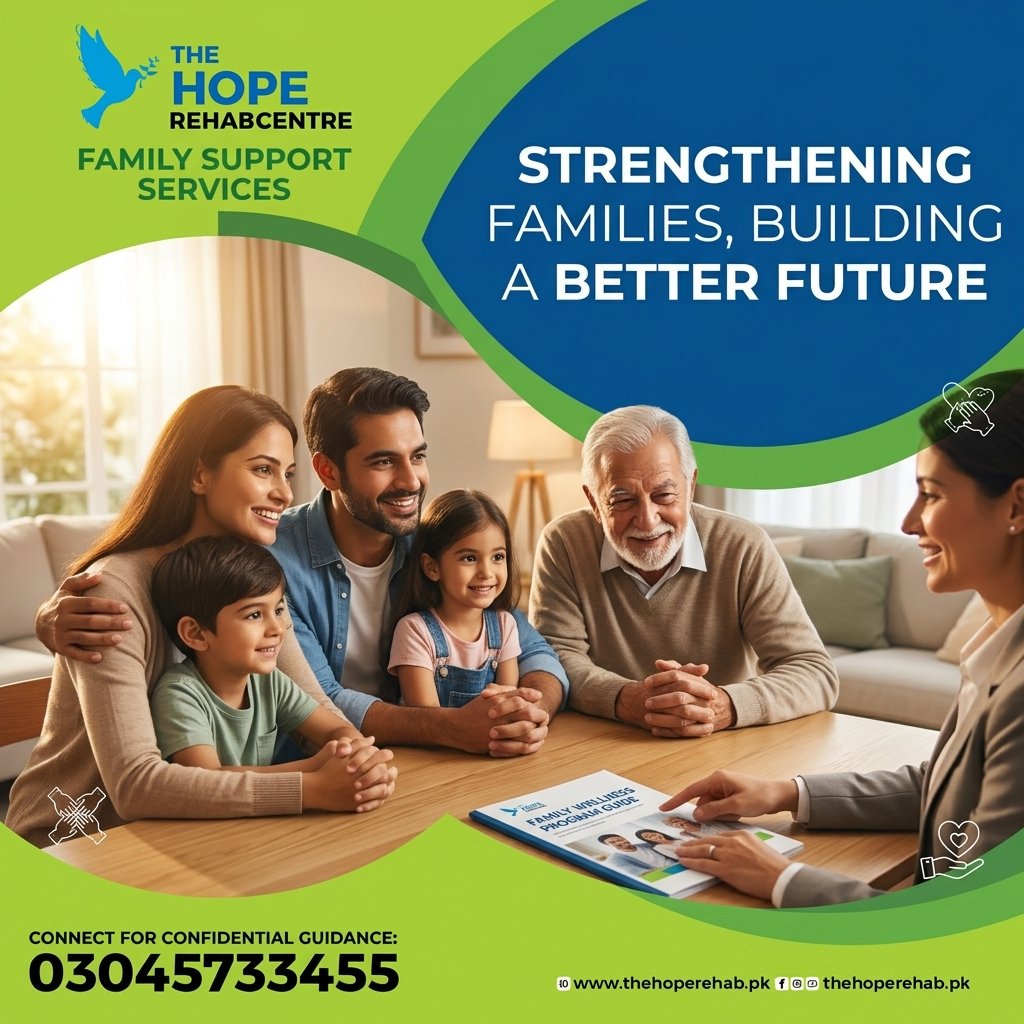
Family Support Program: Strengthening Recovery Through Compassionate Family Care

Family Support Program: Strengthening Recovery Through Compassionate Family Care

Addiction and mental health challenges rarely affect only one person. They can influence relationships, communication, finances, routines, and the emotional well-being of an entire household. A structured Family Support Program helps relatives understand what their loved one is experiencing while learning practical ways to provide support without taking responsibility for the entire recovery process.

Family involvement can be particularly valuable during rehabilitation and aftercare. However, every family is different, and support should be adapted to the individual’s treatment needs, family circumstances, and professional recommendations. At The Hope Rehabilitation Center Islamabad, Pakistan, family support can form part of a broader, individualized approach to recovery.

What Is a Family Support Program?

A Family Support Program is a structured service designed to educate and support relatives of people experiencing addiction or mental health difficulties. It may include family counseling, educational sessions, communication guidance, and assistance with developing healthy boundaries.

The purpose isn’t to blame family members for addiction. Instead, the focus is on understanding the condition, improving relationships, and creating a healthier environment for recovery.

Depending on individual circumstances, a program may address:

  • Addiction education
  • Family counseling
  • Communication skills
  • Healthy boundaries
  • Relapse awareness
  • Emotional support
  • Caregiver stress
  • Continuing recovery support

Why Family Involvement Matters in Recovery

Recovery can become challenging when an individual returns to an environment where family members don’t understand addiction or aren’t sure how to respond to difficult situations.

Supportive relatives can encourage treatment participation and healthier routines. They can also help create an environment where the individual feels comfortable discussing challenges before they become overwhelming.

Family involvement may help with:

  • Better communication
  • Greater understanding of addiction
  • Reduced conflict
  • Stronger emotional support
  • Improved awareness of recovery challenges
  • Healthier family relationships

Family support isn’t a guarantee against relapse, but it can be an important part of a comprehensive recovery plan.

Family Counseling and Communication

Addiction can damage trust over time. Arguments, broken promises, secrecy, and financial problems may leave family members feeling angry or hurt.

Family counseling provides a structured setting where these concerns can be discussed respectfully.

Counseling may help families learn to:

  • Listen without immediately judging
  • Express concerns clearly
  • Discuss expectations realistically
  • Handle disagreements constructively
  • Recognize personal boundaries
  • Rebuild trust gradually

Recovery doesn’t require families to ignore past problems. Instead, counseling can help them address those problems in a healthier way.

Understanding Addiction Without Blame

One of the most important elements of family education is understanding that addiction is a complex health condition. Substance use can involve biological, psychological, social, and environmental factors.

Learning about addiction can help relatives distinguish between supporting recovery and unintentionally enabling harmful behavior.

For example, providing emotional encouragement and helping someone attend treatment may be supportive. Repeatedly covering up harmful consequences or supplying money for substance use may unintentionally make the situation more difficult.

Professional guidance can help families understand the difference.

Healthy Boundaries Are Essential

Being supportive doesn’t mean accepting every behavior. Healthy boundaries can protect both the recovering individual and their relatives.

Examples may include:

  • Clearly communicating household expectations
  • Refusing to participate in harmful behavior
  • Protecting personal finances
  • Maintaining respectful communication
  • Encouraging professional treatment
  • Allowing the individual to take appropriate responsibility

Boundaries should be communicated calmly and consistently rather than used as punishment.

Supporting Mental Health

Families supporting someone with addiction may also encounter depression, anxiety, trauma, or other mental health concerns within the household.

Mental health support may therefore be an important part of family care. If a loved one shows significant changes in mood, behavior, sleep, functioning, or safety, professional assessment may be appropriate.

When addiction and mental health conditions occur together, integrated treatment can help address both areas rather than treating them separately.

Family Support During Rehabilitation

Family Support Program: Strengthening Recovery Through Compassionate Family Care

During rehabilitation, family participation may include scheduled counseling sessions, educational meetings, or discussions with the treatment team when appropriate.

Family members may learn about:

  • The recovery process
  • Cravings and triggers
  • Relapse warning signs
  • Communication strategies
  • Treatment expectations
  • Aftercare planning

The level of family involvement should always respect the individual’s privacy and clinical needs.

At The Hope Rehabilitation Center Islamabad, Pakistan, family participation can be incorporated into treatment when clinically appropriate and with consideration for the needs of everyone involved.

Family Support After Rehabilitation

Recovery continues after a person leaves a structured treatment environment. Returning home can introduce familiar routines, relationships, stressors, and triggers.

Families can help by encouraging:

  • Healthy daily routines
  • Continued professional support
  • Positive activities
  • Open communication
  • Appropriate treatment follow-up
  • Healthy lifestyle changes

At the same time, relatives should avoid placing unrealistic pressure on the person to recover quickly. Sustainable recovery often takes time.

Looking After the Family Caregiver

Family members sometimes focus so heavily on their loved one’s recovery that they neglect their own health.

Caregivers may experience:

  • Stress
  • Anxiety
  • Sleep problems
  • Frustration
  • Emotional exhaustion
  • Feelings of guilt

Taking care of personal health isn’t selfish. Family members may benefit from their own counseling, support groups, trusted relationships, exercise, adequate rest, and appropriate professional assistance.

A healthier caregiver is generally better positioned to provide balanced support.

Frequently Asked Questions

1. What is the purpose of a Family Support Program?

Its purpose is to educate and support relatives while improving communication, establishing healthy boundaries, and helping families participate appropriately in the recovery process.

2. Can family counseling help rebuild trust?

Family counseling can provide a structured environment for discussing past difficulties, improving communication, and working gradually toward healthier relationships. Rebuilding trust usually takes time.

3. Should families be involved in addiction treatment?

Family involvement can be beneficial when appropriate, but the level of participation depends on the individual’s treatment plan, privacy, safety, and family circumstances.

4. How can family members avoid enabling addiction?

Families can encourage professional treatment, maintain clear boundaries, avoid covering up harmful consequences, and avoid providing resources that directly support substance use.

5. Do family members need support too?

Yes. Supporting someone with addiction or mental health difficulties can be emotionally demanding. Family members may benefit from counseling, education, peer support, and strategies for maintaining their own well-being.

Conclusion

A Family Support Program recognizes that recovery can affect an entire family. Education, counseling, healthy boundaries, and compassionate communication can help relatives become a constructive source of support while protecting their own well-being.

At The Hope Rehabilitation Center Islamabad, Pakistan, family support can complement individualized rehabilitation and aftercare. The aim is not to promise a particular outcome, but to help individuals and families understand their options and develop healthier ways of moving forward together.

Recovery is a process, and families don’t have to navigate every challenge alone. With appropriate professional guidance and realistic expectations, family members can play a meaningful role while maintaining compassion, dignity, and healthy boundaries.

Family Support Program – Family Support Program in Islamabad, Pakistan

Family Support Program – Family Support Program in Islamabad, Pakistan

You are programmed Supporters of those recovering from addiction — parents, spouses, siblings or children — typically find themselves emotionally stressed and conflicted as they try to help a loved one. Structured family support helps educate families regarding addiction and mental health disorders, improves communication, and provides a mechanism for the family to become involved in the recovery process.

But this can make a serious difference for individuals and families looking for Family Support Program in Islamabad, Pakistan. Family involvement at The Hope Rehabilitation Center Islamabad, Pakistan plays an important role in holistic treatment by providing the needed support for long-lasting recovery and emotional health.

What is a Family Support Program?

A family support program is a specific service where you are provided with educational and counselling support, as well as practical guidance for family members of those in treatment for either alcohol or drug addiction or mental health conditions. The purpose is to educate families about the recovery process while also honing their skills as healthy, informed and compassionate carriers of empathy.

Involving family in treatment often leads to increased motivation, better communication and more successful long-term recovery.

Family Support in Recovery: Why It Matters

Recovery seldom happens in a vacuum. A home environment filled with support and positivity can help someone stay in treatment and decrease the chances of relapse.

Benefits of family support include:

  • Improved communication among family members
  • An improved understanding of addiction and mental health
  • Reduced conflict within the household
  • Increased emotional support
  • Stronger trust and healthier relationships
  • Better treatment participation
  • Improved long-term recovery outcomes

Additionally, they may aid relatives in dealing with the emotional effects of problems connected with addictions.

Family Support Programs and Who Can Participate

All Family Support program can help:

  • Parents
  • Spouses
  • Children
  • Siblings
  • Close relatives
  • Caregivers
  • Recovery delegation to trusted family members

Participation is modified based on the patient’s treatment outline and personal life situations.

Basics of Family Support Program

Family Counseling

A professional family counselor offers a safe, encouraging environment where family members can address issues, improve communication, and learn to rebuild their relationships.

Addiction and Mental Health Education

Family Support Program – Family Support Program in Islamabad, Pakistan

Knowing that addiction is a medical condition helps appreciably to dispel stigma and allows families to comprehend the pain involved on an emotional as well as physical-psychological basis of recovery.

Communication Skills Training

The ability is constructive feedback that mitigates conflict and misunderstanding, while encouraging open communication, emotional support, and respect of one another.

Emotional Support for Families

Family members commonly feel stressed, anxious, frustrated or helpless. Counseling sessions are a tool to guide them in coping while protecting themselves.

Relapse Prevention Education

Families are taught about early warning signs of relapse, common triggers that can lead to relapse and how to respond in supportive manners rather than judgmental manner.

How Families Can Help During Recovery

Throughout the recovery journey, family members are essential in:

  • Encouraging treatment participation
  • Supporting healthy daily routines
  • Providing emotional encouragement
  • Promoting open and respectful communication
  • Assist in de-stressing on the domestic front
  • Supporting follow-up care and counseling
  • Celebrating recovery milestones

Healthy family dynamics enhance motivation and allow individuals to stay attentive to the long-term goals of recovery.

Mental Health and Family Well-Being

A lot of the people receiving treatment for addiction have mental health issues too such as:

  • Anxiety disorders
  • Depression
  • Trauma-related disorders
  • Chronic stress

Family education builds understanding among family members about these conditions and teaches how to best support compassionately. Integrating with mental health treatment helps build healthier relationships and results in better recovery.

A Family Support Program That Yields Long-Lasting Benefits

Parents that have had an active role in recovery tend to find:

  • Improved trust
  • Stronger relationships
  • Better emotional resilience
  • Increased confidence in supporting recovery
  • Healthier family dynamics
  • Reduced likelihood of relapse
  • Improved overall quality of life

Family-focused therapy for long-lasting recovery from The Hope Rehabilitation Center Islamabad, Pakistan caters to the need of individuals while equally referring to their loved ones in custom-tailored treatment plans.

Frequently Asked Questions (FAQs)

1.     What is a family support service?

Family Support Program Provides family counseling, education and emotional support to the families of individuals receiving treatment for addiction or mental health conditions.

2.     What Is the Role of Family in Recovery?

Family participation fosters better communication, increases emotional support, rebuilds trust and establishes a context for long-term recovery.

3.     Can family counseling improve relationships?

Yes. Family counseling allows relatives to address unpleasant conflicts, enhance communication and solidify relationships under the direction of a trained professional.

4.     Follow-up question: Is the family support program only about addiction?

No. It could also touch on mental health, stress management, emotional health and well-being, communication skills, and building healthy family relationships.

5.     Who have the eligibility to enroll in family support program.

Depending on the treatment plan of an individual, parents, spouses, siblings, adult children and caregivers as well as other close relatives can join.

Conclusion

When families heal together, often greater things can be accomplished in recovery. A Family Support Program established in Islamabad, Pakistan provides loved ones with insight about addiction, communication techniques, trust repair strategies and vital tools necessary to assist with lifelong sobriety.

Family involvement celebrates the fact that family participate in an individual or a patient recovery from addiction and the mental stress of substance abuse. The Hope Rehabilitation Center Islamabad, Pakistan believe it is an essential component of total addiction and mental health care. By participating in family counseling, education, emotional support and relapse prevention planning, families are better able to create a protective environment where all members develop the skills needed for recovery, resilience and reconciliation.

Family Support Program | Strengthening Recovery Through Family Involvement

Family Support Program | Strengthening Recovery Through Family Involvement

Addiction and mental health conditions affect more than just the individual—they also impact parents, spouses, children, siblings, and close friends. Recovery is often more successful when families are educated, involved, and supported throughout the treatment process. A well-structured Family Support Program helps strengthen relationships, improve communication, and create a stable environment that encourages long-term recovery.

Family members may experience stress, confusion, or emotional challenges while supporting a loved one with addiction or mental health concerns. By providing education, counseling, and practical guidance, family support programs help everyone involved better understand the recovery journey. At The Hope Rehabilitation Center Islamabad, Pakistan, family participation is considered an important part of comprehensive rehabilitation, promoting healing for both individuals and their loved ones.

What Is a Family Support Program?

A Family Support Program is a structured service that involves family members in the recovery process through counseling, education, communication training, and emotional support. The goal is to help families understand addiction and mental health conditions while learning healthy ways to encourage recovery.

Rather than placing blame, these programs focus on building trust, improving relationships, and creating a positive home environment that supports lasting change.

Why Family Involvement Matters in Recovery

Recovery does not happen in isolation. Individuals often benefit from having supportive family members who understand the challenges of addiction and mental health recovery.

Family involvement may help:

  • Improve communication between loved ones
  • Encourage treatment participation
  • Reduce misunderstandings and conflict
  • Strengthen emotional support
  • Promote accountability
  • Build a healthier home environment

When families work together, individuals often feel more motivated and confident in maintaining their recovery goals.

Challenges Families May Experience

Living with or supporting someone affected by addiction can be emotionally demanding. Family members may experience:

  • Stress and anxiety
  • Feelings of guilt or frustration
  • Relationship difficulties
  • Financial concerns
  • Loss of trust
  • Emotional exhaustion

A Family Support Program provides guidance that helps families address these challenges while maintaining their own emotional well-being.

Key Components of a Family Support Program

Family Counseling

Family Support Program | Strengthening Recovery Through Family Involvement

Family counseling provides a safe and supportive setting where loved ones can openly discuss concerns, improve communication, and work toward healthier relationships.

Addiction and Mental Health Education

Understanding addiction as a medical condition helps reduce stigma and encourages compassion. Educational sessions may explain:

  • How addiction affects the brain
  • The recovery process
  • Common relapse triggers
  • Healthy ways to offer support
  • The importance of self-care for caregivers

Communication Skills Training

Learning respectful and effective communication can reduce conflict and improve trust within the family.

Healthy communication includes:

  • Active listening
  • Expressing concerns calmly
  • Setting realistic expectations
  • Respecting healthy boundaries
  • Encouraging positive behavior

Emotional Support

Family members also need support throughout the recovery process. Counseling helps loved ones manage stress, build resilience, and maintain emotional balance while supporting someone in treatment.

At The Hope Rehabilitation Center Islamabad, Pakistan, family support services are tailored to meet the unique needs of each family while promoting healthy long-term relationships.

The Role of Healthy Boundaries

Supporting a loved one does not mean ignoring personal well-being. Healthy boundaries help protect both the recovering individual and family members.

Examples of healthy boundaries include:

  • Encouraging responsibility
  • Avoiding enabling behaviors
  • Maintaining open communication
  • Respecting personal space
  • Supporting treatment recommendations

Clear boundaries create a more stable environment that encourages recovery while protecting family relationships.

Supporting Long-Term Recovery

Family support continues to be valuable even after formal rehabilitation ends. Recovery often involves ongoing adjustments, and consistent encouragement can help individuals remain focused on their goals.

Families can support recovery by:

  • Encouraging attendance at therapy sessions
  • Celebrating positive milestones
  • Promoting healthy daily routines
  • Offering emotional encouragement
  • Remaining patient during challenges
  • Participating in aftercare activities when appropriate

These positive actions contribute to a supportive recovery environment without creating unnecessary pressure.

Benefits of a Family Support Program

A structured Family Support Program offers benefits for both individuals and their loved ones.

These benefits may include:

  • Stronger family relationships
  • Improved communication
  • Increased understanding of addiction
  • Reduced family conflict
  • Better emotional well-being
  • Greater confidence in supporting recovery
  • Enhanced long-term treatment outcomes

By working together, families can become an important source of stability throughout the recovery process.

Why Professional Guidance Is Important

Every family’s situation is different. Professional counselors can help families navigate complex emotions, resolve conflicts, and develop practical strategies that support recovery in a healthy and balanced way.

At The Hope Rehabilitation Center Islamabad, Pakistan, experienced professionals work closely with individuals and their families to create personalized care plans that encourage healing, mutual understanding, and lasting recovery.

Frequently Asked Questions (FAQs)

1. What is a Family Support Program?

A Family Support Program provides counseling, education, and practical guidance to help families actively support a loved one’s recovery from addiction or mental health challenges.

2. Why is family involvement important during rehabilitation?

Supportive family relationships can improve communication, encourage treatment participation, reduce stress, and strengthen long-term recovery.

3. Can family counseling improve relationships?

Yes. Family counseling helps rebuild trust, improve communication, resolve conflicts, and create healthier relationship patterns.

4. How can families help prevent relapse?

Families can support recovery by encouraging healthy routines, recognizing early warning signs, maintaining open communication, and supporting ongoing treatment recommendations.

5. Can family members receive support themselves?

Yes. Family support programs also provide emotional guidance and education to help loved ones manage stress and care for their own well-being throughout the recovery journey.

Conclusion

Recovery is often stronger when families are informed, involved, and supported. A comprehensive Family Support Program helps loved ones understand addiction, improve communication, establish healthy boundaries, and create a positive environment that encourages lasting recovery.

At The Hope Rehabilitation Center Islamabad, Pakistan, family support is an important part of holistic rehabilitation. Through counseling, education, emotional support, and personalized guidance, families gain the knowledge and confidence needed to play a meaningful role in their loved one’s recovery while strengthening their own relationships and well-being.

Family Support Program | Building Stronger Families for Lasting Recovery

Family Support Program | Building Stronger Families for Lasting Recovery

Recovery from addiction and mental health challenges is often more successful when families are actively involved in the healing process. A Family Support Program provides education, counseling, and practical guidance to help loved ones better understand addiction, mental health conditions, and the recovery journey. By strengthening communication and rebuilding trust, families can become an important source of encouragement and stability.

Addiction and mental health disorders affect more than just the individual—they can influence relationships, emotional well-being, finances, and daily family life. A structured family support program helps everyone move forward together with greater understanding and resilience.

At The Hope Rehabilitation Center Islamabad, Pakistan, the Family Support Program is designed to complement individualized treatment by promoting healthy family involvement, emotional healing, and long-term recovery.

What Is a Family Support Program?

A Family Support Program is a structured service that educates and supports family members throughout the recovery process. It helps loved ones understand the nature of addiction and mental health conditions while providing tools to improve communication, manage stress, and support recovery in healthy ways.

A typical program may include:

  • Family counseling sessions
  • Educational workshops
  • Emotional support meetings
  • Communication skills training
  • Relapse prevention education

The aim is to strengthen family relationships while supporting the individual receiving treatment.

Why Family Support Is Important

Recovery does not happen in isolation. A supportive family environment can encourage motivation, reduce stress, and improve treatment engagement.

Family involvement may help by:

  • Improving understanding of addiction and recovery
  • Reducing misunderstandings and conflict
  • Encouraging healthy communication
  • Providing emotional support
  • Helping maintain long-term recovery goals

At The Hope Rehabilitation Center Islamabad, Pakistan, family participation is encouraged whenever it is appropriate and beneficial for the individual’s treatment plan.

How Addiction Affects Families

Substance use disorders and mental health conditions often have a significant impact on loved ones.

Emotional Challenges

Family members may experience anxiety, sadness, frustration, or feelings of helplessness while supporting someone with addiction.

Communication Difficulties

Misunderstandings, arguments, and emotional distance can develop over time if problems remain unresolved.

Financial and Social Stress

Addiction may create financial strain, workplace difficulties, and changes in family responsibilities.

Loss of Trust

Repeated substance use or unhealthy behaviors can affect trust within relationships. Family counseling can help rebuild healthy communication over time.

Key Components of a Family Support Program

Family Support Program | Building Stronger Families for Lasting Recovery

Family Counseling

Counseling provides a safe and respectful environment where family members can discuss concerns, improve communication, and work toward healthier relationships.

Education About Addiction

Learning about addiction as a health condition helps reduce stigma and improves understanding of the recovery process.

Topics may include:

  • Causes of addiction
  • Recovery expectations
  • Relapse prevention
  • Healthy family roles
  • Emotional support strategies

Communication Skills

Families learn practical techniques to:

  • Listen actively
  • Express concerns respectfully
  • Set healthy boundaries
  • Resolve conflicts constructively

These skills support healthier interactions during and after treatment.

Emotional Wellness

Family members also benefit from learning stress management and self-care strategies, recognizing that their own well-being is an important part of the recovery process.

Benefits of Family Involvement

A strong Family Support Program can contribute to:

  • Better communication
  • Increased emotional stability
  • Improved treatment participation
  • Stronger family relationships
  • Greater understanding of addiction
  • Healthier recovery environments

When families receive education and guidance, they are often better prepared to provide meaningful support without becoming overwhelmed.

Supporting Long-Term Recovery

Recovery continues long after formal treatment ends. Family support remains valuable during this stage by encouraging healthy routines, celebrating progress, and recognizing early signs of emotional difficulty.

Long-term recovery strategies may include:

  • Regular family meetings
  • Continued counseling when needed
  • Encouraging healthy daily routines
  • Supporting treatment recommendations
  • Maintaining open communication

At The Hope Rehabilitation Center Islamabad, Pakistan, aftercare planning may include family education to help sustain recovery beyond residential or outpatient treatment.

Frequently Asked Questions (FAQs)

1. What is a Family Support Program?

A Family Support Program provides education, counseling, and guidance to help families support loved ones recovering from addiction or mental health conditions.

2. Why is family involvement important during recovery?

Family support can improve communication, strengthen motivation, and create a healthier environment that supports long-term recovery.

3. Can family counseling help rebuild trust?

Yes. Counseling encourages honest communication, healthy boundaries, and gradual rebuilding of trust within relationships.

4. Do family members receive support too?

Yes. Family programs recognize that loved ones may also experience emotional stress and provide guidance to help them cope effectively.

5. Can family support reduce the risk of relapse?

While no program can guarantee outcomes, a supportive and informed family environment may help individuals stay engaged in recovery and recognize challenges early.

Conclusion

A Family Support Program recognizes that recovery is often strongest when families heal together. Education, counseling, and open communication help loved ones better understand addiction, strengthen relationships, and provide meaningful support throughout the recovery journey.

At The Hope Rehabilitation Center Islamabad, Pakistan, family support is an important part of comprehensive care. By helping individuals and their families build trust, improve communication, and develop healthier coping strategies, the program supports lasting recovery and improved emotional well-being for everyone involved.

Family Support Program | Strengthening Recovery Through Care and Connection

Family Support Program | Building Stronger Families for Lasting Recovery

Recovery from addiction or mental health challenges is rarely a journey taken alone. Family plays a powerful role in helping individuals heal, rebuild trust, and maintain long-term stability. A Family Support Program is designed to involve loved ones in the treatment process, offering education, emotional guidance, and structured support.

When a person struggles with addiction, depression, trauma, or behavioral health issues, the entire family can be affected. Emotional stress, communication breakdown, and uncertainty often become part of daily life. A strong family support system can make recovery more stable and meaningful.

At The Hope Rehabilitation Center Islamabad, Pakistan, family support programs are an important part of treatment, helping both individuals and their families move toward healthier relationships and long-term healing.

What Is a Family Support Program?

A Family Support Program is a structured approach that helps family members understand addiction, mental health conditions, and the recovery process. It creates a safe space where families can learn how to support their loved one while also taking care of their own emotional well-being.

These programs may include:

  • Family counseling sessions
  • Emotional support meetings
  • Educational workshops
  • Conflict resolution guidance
  • Communication skill building

The goal is to strengthen family relationships and improve recovery outcomes.

Why Family Support Matters in Recovery

Addiction and mental health challenges can affect trust, communication, and emotional stability within a family. Without proper understanding, families may feel helpless or overwhelmed.

A family support program can help by:

  • Improving understanding of addiction and mental health
  • Reducing blame and confusion
  • Encouraging healthy communication
  • Building emotional resilience
  • Supporting long-term recovery goals

At The Hope Rehabilitation Center Islamabad, Pakistan, family involvement is encouraged when it can positively support the recovery journey.

How Addiction Affects Families

Substance use disorders often create challenges beyond the individual. Family members may experience:

Emotional Stress

Watching a loved one struggle can lead to anxiety, sadness, and emotional exhaustion.

Trust Issues

Repeated relapse, dishonesty, or unpredictable behavior can damage trust within the home.

Financial Strain

Addiction may create financial difficulties that affect the entire family.

Communication Problems

Families often struggle to talk openly about addiction, leading to conflict or silence.

A structured Family Support Program helps families address these issues in a healthy and productive way.

Key Elements of a Family Support Program

Family Support Program | Strengthening Recovery Through Care and Connection

Family Counseling Sessions

Counseling creates an environment where family members can express feelings, ask questions, and work through emotional challenges together.

At The Hope Rehabilitation Center Islamabad, Pakistan, these sessions are guided by trained professionals who focus on healing relationships and improving understanding.

Education About Addiction and Mental Health

Learning about addiction, relapse, withdrawal, and emotional triggers can help families respond with more patience and awareness.

Education can reduce misunderstandings and improve support at home.

Communication Skills Training

Healthy communication is essential during recovery. Families may learn:

  • Active listening
  • Setting boundaries
  • Managing conflict calmly
  • Expressing emotions clearly

These skills help reduce tension and build stronger relationships.

Relapse Prevention Support

Families can learn how to recognize warning signs of relapse and how to respond appropriately without panic or blame.

This can improve long-term recovery planning.

Benefits of Family Involvement in Recovery

Family support can improve treatment outcomes in many ways.

Emotional Encouragement

Support from loved ones can motivate individuals to stay committed to treatment.

Improved Accountability

Family involvement can help individuals stay focused on their recovery goals.

Better Home Environment

A healthy and supportive home can reduce stress and improve emotional stability.

Stronger Relationships

Recovery can create opportunities to rebuild trust and strengthen family bonds.

At The Hope Rehabilitation Center Islamabad, Pakistan, the goal is to help both individuals and families heal together.

Family Healing Is Important Too

Family members also need support. Living with addiction or mental health struggles can be emotionally draining. Family support programs remind loved ones that their well-being matters too.

Support may help family members:

  • Manage stress
  • Set healthy boundaries
  • Understand their own emotions
  • Develop better coping strategies

Healing as a family can create a stronger foundation for lasting recovery.

Frequently Asked Questions (FAQs)

1. What is a Family Support Program?

A Family Support Program helps families understand addiction and mental health while providing emotional support and guidance during recovery.

2. Why is family support important in addiction recovery?

Family support can improve motivation, emotional stability, and long-term recovery success.

3. Can family counseling help rebuild trust?

Yes. Counseling can improve communication and help repair damaged relationships over time.

4. Do family members need support too?

Yes. Addiction affects the whole family, and emotional support for loved ones is often important.

5. Can family support reduce relapse risk?

A supportive and informed family environment can help individuals stay focused on recovery and recognize challenges early.

Conclusion

A Family Support Program is an important part of recovery because it recognizes that healing often involves more than one person. Addiction and mental health challenges can affect the entire family, but with education, counseling, and emotional support, families can become a strong source of encouragement and stability.

At The Hope Rehabilitation Center Islamabad, Pakistan, family support programs are designed to strengthen relationships, improve communication, and support lasting recovery. Through shared understanding and professional guidance, families can move forward together with greater hope, trust, and emotional balance.