Addiction and mental health challenges rarely affect only one person. They can influence relationships, communication, finances, routines, and the emotional well-being of an entire household. A structured Family Support Program helps relatives understand what their loved one is experiencing while learning practical ways to provide support without taking responsibility for the entire recovery process.
Family involvement can be particularly valuable during rehabilitation and aftercare. However, every family is different, and support should be adapted to the individual’s treatment needs, family circumstances, and professional recommendations. At The Hope Rehabilitation Center Islamabad, Pakistan, family support can form part of a broader, individualized approach to recovery.
What Is a Family Support Program?
A Family Support Program is a structured service designed to educate and support relatives of people experiencing addiction or mental health difficulties. It may include family counseling, educational sessions, communication guidance, and assistance with developing healthy boundaries.
The purpose isn’t to blame family members for addiction. Instead, the focus is on understanding the condition, improving relationships, and creating a healthier environment for recovery.
Depending on individual circumstances, a program may address:
- Addiction education
- Family counseling
- Communication skills
- Healthy boundaries
- Relapse awareness
- Emotional support
- Caregiver stress
- Continuing recovery support
Why Family Involvement Matters in Recovery
Recovery can become challenging when an individual returns to an environment where family members don’t understand addiction or aren’t sure how to respond to difficult situations.
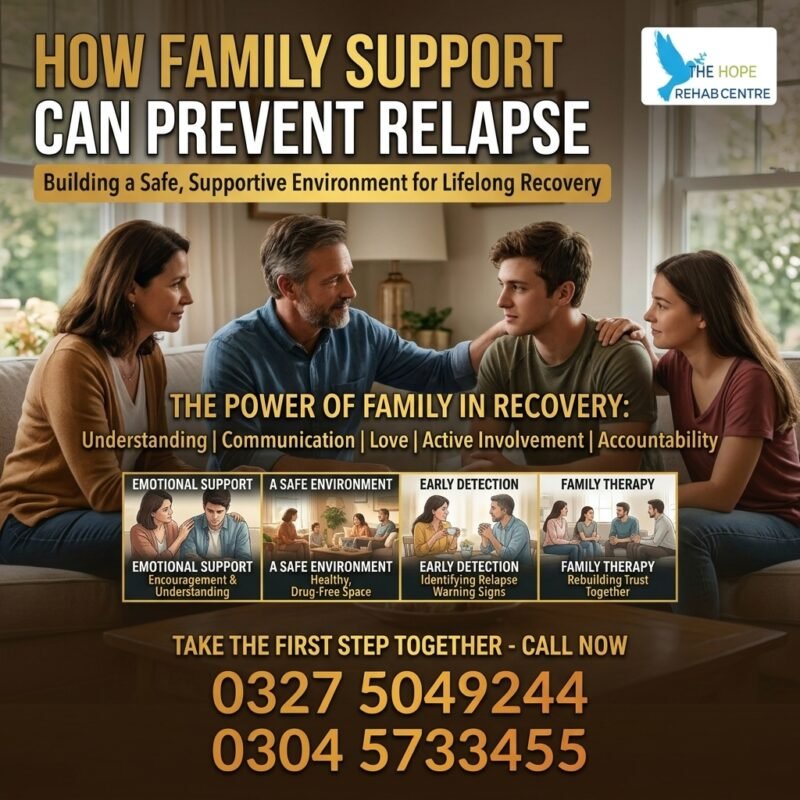
Supportive relatives can encourage treatment participation and healthier routines. They can also help create an environment where the individual feels comfortable discussing challenges before they become overwhelming.
Family involvement may help with:
- Better communication
- Greater understanding of addiction
- Reduced conflict
- Stronger emotional support
- Improved awareness of recovery challenges
- Healthier family relationships
Family support isn’t a guarantee against relapse, but it can be an important part of a comprehensive recovery plan.
Family Counseling and Communication
Addiction can damage trust over time. Arguments, broken promises, secrecy, and financial problems may leave family members feeling angry or hurt.
Family counseling provides a structured setting where these concerns can be discussed respectfully.
Counseling may help families learn to:
- Listen without immediately judging
- Express concerns clearly
- Discuss expectations realistically
- Handle disagreements constructively
- Recognize personal boundaries
- Rebuild trust gradually
Recovery doesn’t require families to ignore past problems. Instead, counseling can help them address those problems in a healthier way.
Understanding Addiction Without Blame
One of the most important elements of family education is understanding that addiction is a complex health condition. Substance use can involve biological, psychological, social, and environmental factors.
Learning about addiction can help relatives distinguish between supporting recovery and unintentionally enabling harmful behavior.
For example, providing emotional encouragement and helping someone attend treatment may be supportive. Repeatedly covering up harmful consequences or supplying money for substance use may unintentionally make the situation more difficult.
Professional guidance can help families understand the difference.
Healthy Boundaries Are Essential
Being supportive doesn’t mean accepting every behavior. Healthy boundaries can protect both the recovering individual and their relatives.
Examples may include:
- Clearly communicating household expectations
- Refusing to participate in harmful behavior
- Protecting personal finances
- Maintaining respectful communication
- Encouraging professional treatment
- Allowing the individual to take appropriate responsibility
Boundaries should be communicated calmly and consistently rather than used as punishment.
Supporting Mental Health
Families supporting someone with addiction may also encounter depression, anxiety, trauma, or other mental health concerns within the household.
Mental health support may therefore be an important part of family care. If a loved one shows significant changes in mood, behavior, sleep, functioning, or safety, professional assessment may be appropriate.
When addiction and mental health conditions occur together, integrated treatment can help address both areas rather than treating them separately.
Family Support During Rehabilitation
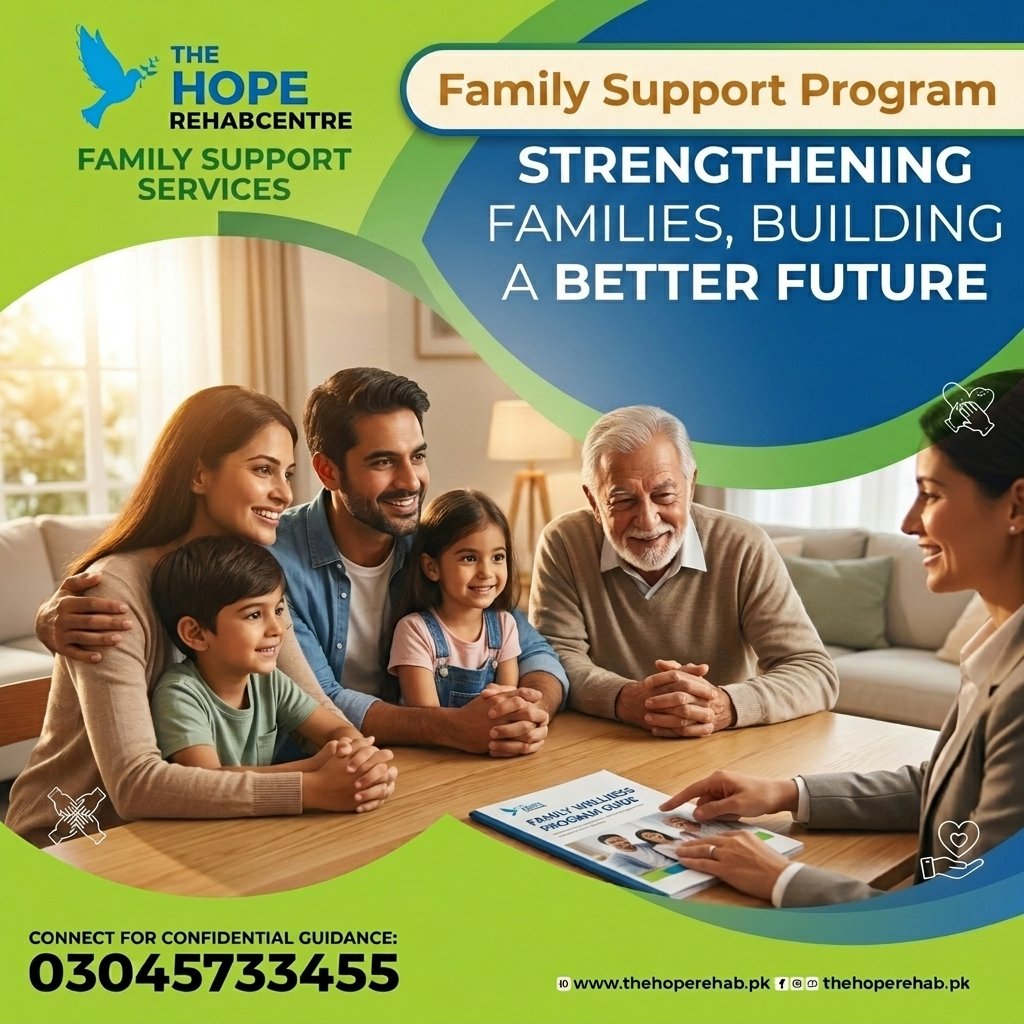
During rehabilitation, family participation may include scheduled counseling sessions, educational meetings, or discussions with the treatment team when appropriate.
Family members may learn about:
- The recovery process
- Cravings and triggers
- Relapse warning signs
- Communication strategies
- Treatment expectations
- Aftercare planning
The level of family involvement should always respect the individual’s privacy and clinical needs.
At The Hope Rehabilitation Center Islamabad, Pakistan, family participation can be incorporated into treatment when clinically appropriate and with consideration for the needs of everyone involved.
Family Support After Rehabilitation
Recovery continues after a person leaves a structured treatment environment. Returning home can introduce familiar routines, relationships, stressors, and triggers.
Families can help by encouraging:
- Healthy daily routines
- Continued professional support
- Positive activities
- Open communication
- Appropriate treatment follow-up
- Healthy lifestyle changes
At the same time, relatives should avoid placing unrealistic pressure on the person to recover quickly. Sustainable recovery often takes time.
Looking After the Family Caregiver
Family members sometimes focus so heavily on their loved one’s recovery that they neglect their own health.
Caregivers may experience:
- Stress
- Anxiety
- Sleep problems
- Frustration
- Emotional exhaustion
- Feelings of guilt
Taking care of personal health isn’t selfish. Family members may benefit from their own counseling, support groups, trusted relationships, exercise, adequate rest, and appropriate professional assistance.
A healthier caregiver is generally better positioned to provide balanced support.
Frequently Asked Questions
1. What is the purpose of a Family Support Program?
Its purpose is to educate and support relatives while improving communication, establishing healthy boundaries, and helping families participate appropriately in the recovery process.
2. Can family counseling help rebuild trust?
Family counseling can provide a structured environment for discussing past difficulties, improving communication, and working gradually toward healthier relationships. Rebuilding trust usually takes time.
3. Should families be involved in addiction treatment?
Family involvement can be beneficial when appropriate, but the level of participation depends on the individual’s treatment plan, privacy, safety, and family circumstances.
4. How can family members avoid enabling addiction?
Families can encourage professional treatment, maintain clear boundaries, avoid covering up harmful consequences, and avoid providing resources that directly support substance use.
5. Do family members need support too?
Yes. Supporting someone with addiction or mental health difficulties can be emotionally demanding. Family members may benefit from counseling, education, peer support, and strategies for maintaining their own well-being.
Conclusion
A Family Support Program recognizes that recovery can affect an entire family. Education, counseling, healthy boundaries, and compassionate communication can help relatives become a constructive source of support while protecting their own well-being.
At The Hope Rehabilitation Center Islamabad, Pakistan, family support can complement individualized rehabilitation and aftercare. The aim is not to promise a particular outcome, but to help individuals and families understand their options and develop healthier ways of moving forward together.
Recovery is a process, and families don’t have to navigate every challenge alone. With appropriate professional guidance and realistic expectations, family members can play a meaningful role while maintaining compassion, dignity, and healthy boundaries.