A finding a good Ice Treatment Center Islamabad is one of the important parts for ice or crystal meth addiction. Ice (or crystal methamphetamine), when released into the brain is a powerful stimulant drug which, with continued use, may seriously impact the mind and body, as well as emotions, behaviors and everyday life.
Frequent use may result in cravings, tolerance, sleep disturbances, mood changes, and lack of self-control over substances. Through professional treatment, the physiological as well as psychosocial aspects of addiction can be tackled.
A structured supportive facility that assists individuals and families with addiction and other related mental health problems is found at The Hope Rehabilitation Center Islamabad, Pakistan
What Is Ice Addiction?
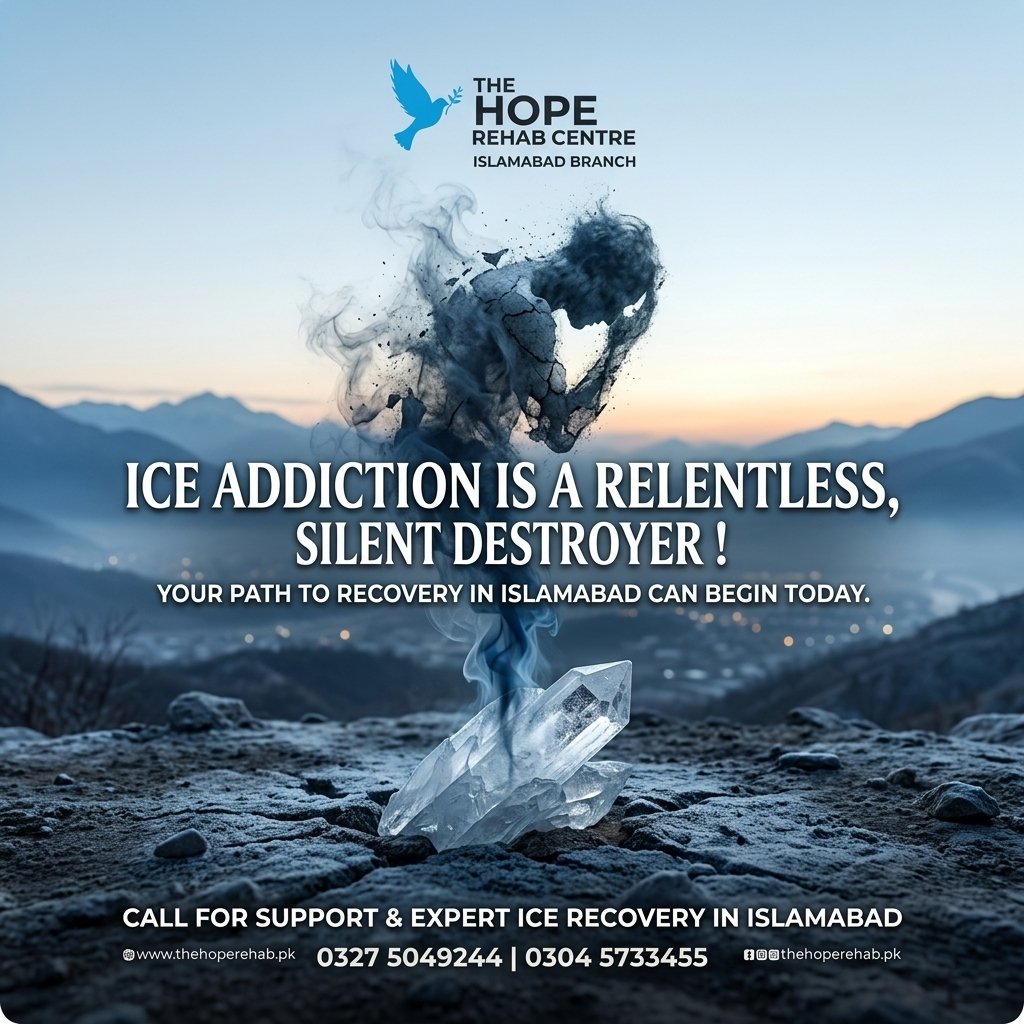
Crystal methamphetamine, abbreviated to ‘ice’, is by far one of the most popular minds stimulating drugs that powerfully impacts the central nervous system. It can produce heightened alertness, energy, and euphoria; however, repeated use can lead to addiction or dependence.
Ice addiction may result in individuals compulsively using it even if it harms their health. A drug user might realize their use causes problems, yet still struggle to quit.
Common signs include:
- Strong cravings for ice
- Increasing tolerance
- Staying awake for extended periods
- Changes in appetite and weight
- Irritability or mood swings
- Neglecting work or family responsibilities
- Social withdrawal
- Financial or relationship problems
- Trying to stop for the millionth time, without success
- Repeated use in the face of physical or psychological issues
Identifying this early may assist a family in acquiring the proper professional help.
The Importance of Professional Ice Addiction Treatment
Ice addiction can harm other parts of a person your overall health. Chronic use or heavy use may be linked to cardiovascular issues, sleep problems, eating disorders, dental issues, anxiety problems, paranoia, depression and psychotic symptoms.
Treatment then needs to be more than just stop using drugs.
An Ice Treatment Center Islamabad treatment plan for one person is not necessarily the best choice for another, and Ice Treatment program services at an Ice Commercial Rehabilitation Institute could consist of medical evaluation, detoxification, individual therapy, behavioral therapy, ancillary remedy staff members assistance, support from relatives and close buddies, relapse prevention preparing and community-based recovery assist.
Assessment Before Ice Addiction Treatment
An initial assessment can also assist professionals in identifying the circumstances of the individual prior to starting treatment.
The assessment may consider:
- When to use and why you have used ice in the past
- Other substances being used
- Physical health
- Mental health symptoms
- Previous treatment attempts
- Current medications
- Withdrawal experiences
- Family and social environment
- Immediate safety concerns
This information may assist in establishing an appropriate level of care.
Ice Detox and Withdrawal Support
For some, this can fall under a time period categorized as an stimulant clean or the withdrawal that happens soon after halting common methamphetamines usage.
Possible symptoms include:
- Extreme tiredness
- Increased sleep
- Increased appetite
- Low mood
- Irritability
- Anxiety
- Difficulty concentrating
- Disturbed sleep
- Strong cravings
The severity and the length of time may differ widely.
Stimulant withdrawal does not typically require the same sort of medical detoxification used for alcohol or some sedative drugs, but proper supervision by professionals may still be beneficial. Emergency care is needed for extreme depression, suicidal ideation, psychosis, major agitation or other serious symptoms.
Detox or withdrawal management is not a comprehensive treatment for addiction. It typically requires ongoing treatment for behavioral and psychological elements.
Cognitive Behavioral Therapy for Ice Addiction
Counseling can assist individuals in identifying these patterns which underlie ice use and learning how to strengthen their responses to triggers and adversity.
Behavioral treatment may help individuals:
- Identify personal triggers
- Manage cravings
- Recognize unhealthy thought patterns
- Improve decision-making
- Develop stress-management skills
- Strengthen motivation for recovery
- Create strategies for high-risk situations
When clinically indicated, cognitive behavioral approaches may also be incorporated into treatment.
The First Step in Dual-Diagnosis Treatment – Mental Health
Co-occurrence of ice use and mental health problems Each person might use substances in parallel with anxiety, depression, trauma symptoms, paranoia or psychotic symptoms.
A dual diagnosis or co-occurring disorder is when two of these disorders occur at the same time; this can be addiction and a mental health condition.
As a result, mental health assessment is an essential aspect of holistic addiction services. If co-occuring mental health and substance use disorders are present they should be treated simultaneously.
Covert Family Support for Ice Dependency
Look up the word: ICE ADDICTION and you will find that it not only involves all members of a family. They may experience stress and fear or have trouble communicating, worry about their finances or need guidance in knowing how to respond.
Counseling programs can also focus on family members as addiction and recovery are known to have an impact on loved ones because nutrition when blackened out is not consumed in a sober state but part of the community event itself.
Family members might be reminded to:
- Support professional treatment
- Communicate without unnecessary confrontation
- Establish appropriate boundaries
- Avoid enabling continued drug use
- Encourage healthy routines
- Learn about relapse warning signs
- Seek professional guidance during crises
Also, families should take care of their emotional health.
Relapse Prevention After Ice Treatment
After the first phase of intoxication, it is followed by recovery. People have cravings triggered in high-stress situations, when exposed to certain places or people where they used drugs before, etc.
A relapse-prevention plan may include:
- Identifying personal triggers
- Continuing counseling
- Maintaining healthy sleep routines
- Developing positive social connections
- Avoiding high-risk environments
- Practicing stress-management techniques
- Attending follow-up appointments
- Getting Support when the Warnings Turns Up
Professional reassessment can help determine what other measures could be required if a person begins to use again.
Selecting an Ice Treatment Center Islamabad
Ice Treatment Center Islamabad Family’s needs to explore the services as well as professional support available.
Important questions include:
- Do we provide a full evaluation of physical and emotional health?
- Does it begin with professional addiction and mental health staff?
- How is withdrawal monitored?
- Is behavioral therapy available?
- Do they evaluate for co-occurring mental health conditions?
- Is family support included?
- Is there relapse-prevention planning offered during the program?
- Is there After-Care available after the program is completed?
Medical and psychiatric emergencies2 What happens if there are medical or psychiatric emergencies.
Do not depend on mere assurances of guaranteed or immediate recovery. The treatment of addiction is professional, person-centered, and safety-driven.
The Hope Rehabilitation Center Islamabad, Pakistan
Islamabad Addiction Treatment Centre The Hope Rehabilitation Center Islamabad, Pakistan offer structured residential support to addicts and their families throughout Pakistan.
People have a long history of substance misuse and this should be reflected in their treatment plan as well as physical health, psychological needs, family issues and recovery needs. Depending on the needs of the person, care can consist of therapy, behavioral management, mental health services, family involvement and prevention plans.
Finding professional help can help people and families understand their treatment options.
Frequently Asked Questions
1. What is ice addiction?
Crystal Methamphetamine (Meth) Addiction — also known as Ice / Crank / Crystal Nausea is a substance use disorder reflecting problematic or compulsive use of the past form of meth. It can lead to severe addictions, developing tolerance, making risky decisions and not stopping even when it brings harm.
2. What does it mean when someone stops using ice?
Meanwhile, others are plagued by severe fatigue, excessive sleep, an increased appetite and low mood that leads to irritability, anxiety and difficulty concentrating with intense cravings. Extreme depression, having thoughts of suicide, experiencing psychosis or feeling severely confused about your own mind require immediate medical professionals.
3. Is detox treatment effective for ice abuse?
No. Detox or withdrawal management addresses the early physical and/or psychological consequences of abstaining from drugs. Then continuing treatment may involve counseling, behavioral health therapy, mental health support services, family involvement and activities surrounding relapse prevention.
4. Yes, as ice addiction is common there are many factors that can affect mental health.
Yes. Methamphetamine use can lead to anxiety, depression, severe paranoia, sleep disturbance and psychotic behavior (especially with heavy or prolonged use). There are a lot of signs to note when mental health symptoms emerge, and professional appraisal is key.
5. How long does it work for treating ice addiction?
How long you stay in treatment depends on factors like your substance-use history and mental health, physical condition, how well you did during treatment and whether or not to need ongoing support. There is no one treatment timeline that is right for everyone.
Conclusion
Crystal methamphetamine addiction is a serious problem that may very best require properly fashioned professional help at an Ice Treatment Center Islamabad The holistic nature of treatment needs to be such that it addresses the risks posed by withdrawal, behavioral patterns, mental health conditions (and other concurrent addiction problems), family issues, and any potential for relapse because ice can impact both physical and psychological wellbeing.
However, considering medical assessments, counseling, behavioral therapy, psychological support and family involvement can provide a complete approach to treatment.
Advice or support from a medical professional with experience in mental health, particularly substance misuse, could indicate further treatment steps suitable for you or someone close to you if concerned about ice. The Hope Rehabilitation Center Islamabad, Pakistan offers a framework for assisting people and families in regain from addicts.