The process of addiction or mental health recovery is a lifelong process that does not end after the initial treatment. Although a rehabilitation program is an important step, long-term stability needs support, awareness, and practical plans. It is here that the relapse control program comes in with structure.
The Relapse Control Program designed in Islamabad Pakistan aims at assisting the individuals to identify the early warning signs, control triggers, and practice healthy routines. In The Hope Rehabilitation Center Islamabad, Pakistan, relapse prevention is regarded as an essential component of the recovery process, which provides patients with the instruments and advice to continue the progress in the long term.
The knowledge of the relapse control programs functionality can assist individuals and families to remain ready and dedicated to the long-term recovery.
Relapse and the Problems of Relapse.
Relapse has been misinterpreted as a failure yet in fact, it may be an element of the recovery process to some individuals. It is a relapse to substance use or other unhealthy behaviors after some improvement.
Relapse can be caused by several factors such as stress, emotional difficulties, environmental stimuli, or absence of constant support. The identification of these factors is a significant move towards prevention.
One of the professional Relapse Control Programs in Islamabad Pakistan is aimed at early identification of these challenges and assisting individuals to devise strategies to deal with them.
The main elements of a Relapse Control Program.
Relapse prevention programs are structured to offer continuous support and practical aids that assist people to remain stable in their daily lives.
Trigger Identification
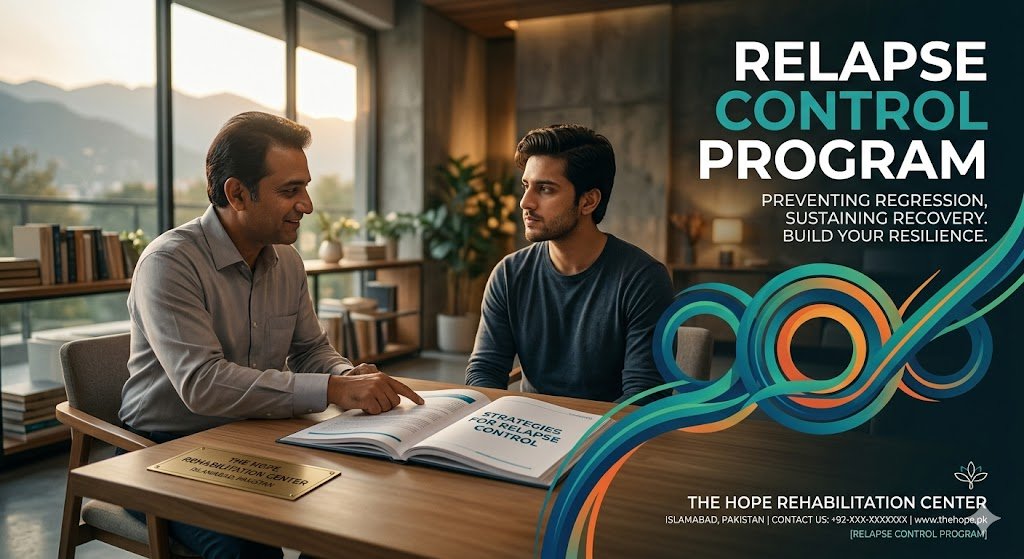
Trigger identification is one of the most significant elements of relapse prevention. The triggers can be emotional stress, some environments or social situations which enhance the risk of relapsing.
In The Hope Rehabilitation Center Islamabad, Pakistan, patients are instructed to identify their own triggers and how they affect behavior.
A structured Relapse Control Program in Islamabad Pakistan, assists people in building awareness, which is crucial in prevention of relapse.
Coping Strategies and Skill Development.
One of the most important aspects of relapse prevention is learning to deal with stress and emotional difficulties. Practical coping skills are taught to patients to be applied in real life.
These policies can involve:
- Stress management techniques
- Meditative and restorative activities.
- Problem-solving skills
- Emotional regulation methods
The Relapse Control Program of Islamabad Pakistan is a reliable program that aims at developing these skills in order to enable people to cope with the challenges without resorting to substance use.
Continuous Counseling and Support.
Follow-up counseling is significant in sustaining recovery. Constant therapy sessions allow individuals a secure environment to talk about their progress, difficulties, and concerns.
The Hope Rehabilitation Center Islamabad, Pakistan, is a facility where follow-up counseling sessions will be conducted to help the patients integrate into their normal lives.
In Islamabad Pakistan, a professional Relapse Control Program will see to it that the individuals do not lose touch with the support systems even after they have undergone initial treatment.
The importance of Routine and Lifestyle Changes.
Making a healthy routine is a significant component of relapse prevention. Daily routines can assist people to be attentive and minimize the risk of triggers.
The positive lifestyle changes could be:
- Having a regular sleep schedule.
- Physical exercise.
- Practicing healthy eating habits
- Staying involved in productive activities
The Hope Rehabilitation Center Islamabad, Pakistan, encourages patients to implement practices that can promote physical and emotional health.
The Relapse Control Program in Islamabad Pakistan is well planned and focused on the significance of stability and balance in daily life.
The Significance of Family and Social Support.
Family and friends can play a great role in the recovery process. Loved ones can also offer encouragement and make people remain motivated when they have knowledge about the recovery process.
Family intervention can involve attending counseling sessions or finding out how to contribute to recovery positively. Communication and understanding can be open and foster relationships and decrease stress.
A reputable Relapse Control Program in Islamabad Pakistan understands the importance of a good support system and promotes the involvement of the family where necessary.
Family support is a part of recovery planning at The Hope Rehabilitation Center Islamabad, Pakistan, to facilitate long-term success.
Long-term Relapse Prevention Program Benefits.
Relapse prevention programs have long-term advantages beyond substance use avoidance. They assist people to gain confidence, enhance emotional stability, and feel stable.
Among the major advantages, there are:
- Increased self-awareness
- Better stress management
- Stronger relationships
- Improved decision-making skills
There is a Relapse Control Program in Islamabad Pakistan that is comprehensive and aims at assisting individuals to live balanced and fulfilling lives following treatment.
In The Hope Rehabilitation Center Islamabad, Pakistan, relapse prevention is considered as a continuous process that helps in the constant growth and self-development.
Frequently Asked Questions (FAQs)
1. What is a relapse control program?
Relapse control program is an organized plan that assists people to sustain recovery by recognizing triggers, devising coping skills and continuous support.
2. What is the significance of relapse prevention?
Relapse prevention assists a person to cope with the difficulties, minimize the possibility of relapsing to substance use, and sustain long-term recovery.
3. What are common triggers for relapse?
Examples of common triggers are stress, emotional problems, particular settings, or social circumstances related to past substance use.
4. Is it possible to prevent relapse?
Although relapse is not always fully avoidable, structured programs can greatly lower the risk of relapse by equipping individuals to manage the challenges effectively.
5. How much time is required to be spent in a relapse prevention program?
The time will be different according to personal needs, yet constant assistance can be helpful in the long-term recovery.
Conclusion
The process of recovery is a lifelong process that involves constant effort, consciousness and encouragement. The Relapse Control Program in Islamabad Pakistan is a structured program that is very important in assisting people to stay on track and overcome difficulties.
Relapse prevention programs offer a solid base of permanent recovery by emphasizing trigger identification, coping mechanisms, counseling, and lifestyle modifications. This process is further reinforced by the support of the family and professionals who help individuals develop confidence and resilience.
Relapse control initiatives in The Hope Rehabilitation Center Islamabad, Pakistan, are based on ethical care, patient well-being, and long-term success. With consistent counseling and systematic support, people will be able to sustain the process of recovery and have a brighter future of being healthier.