Alcohol-dependence is a challenging medical and psychological health issue at the individual, familial, and community levels. Detox Is an Inevitable First Step for Recovery Detoxification is one of the most important first steps to towards recovery. When a person sees the success rates of alcohol detox treatment clearly, they are better able to make an informed choice about what to expect and have confidence in their own decision. Clarity in what detox can and cannot do is key for the Alcohol detox in Islamabad seeking safe & ethical care.
This article describes how alcohol detox functions, the real definition of “success” within a medical context, the variables that drive outcomes and where detox fits into longer-term recovery.
Understanding Alcohol Detoxification Treatment
Alcohol detox Alcohol detoxification, otherwise known as alcohol detox, is a managed process intended to assist the body in safely getting rid of alcohol as well as coping with withdrawal symptoms. When a heavy drinker stops drinking, whether because of pregnancy or other circumstances, the nervous systems becomes hyper-excited Antugonik not only about alcohol’s effects? This response may lead to mild symptoms such as anxiety and tremors, and in severe cases can result in seizures or delirium.
In medical detox, the process entails:
- Medical stabilization
- Symptom monitoring and management
- Preventing life-threatening withdrawal complications
- Pre-treatment of the patient
Detox is not a treatment for alcoholism. It is not an endpoint but rather a starting point for ongoing care and recovery.
What Are “Success Rates” for Alcohol Detox?
We should clarify the meaning of success when we are talking about alcohol detoxification. In healthcare, success is not continuous sobriety after detox. In terms of success in detox Clinically, detox “success is commonly defined as:
- Consistently were able to withdraw safely
- Stabilization of physical health
- Prevention of severe medical complications
- Preparedness for onward rehabilitation or therapy
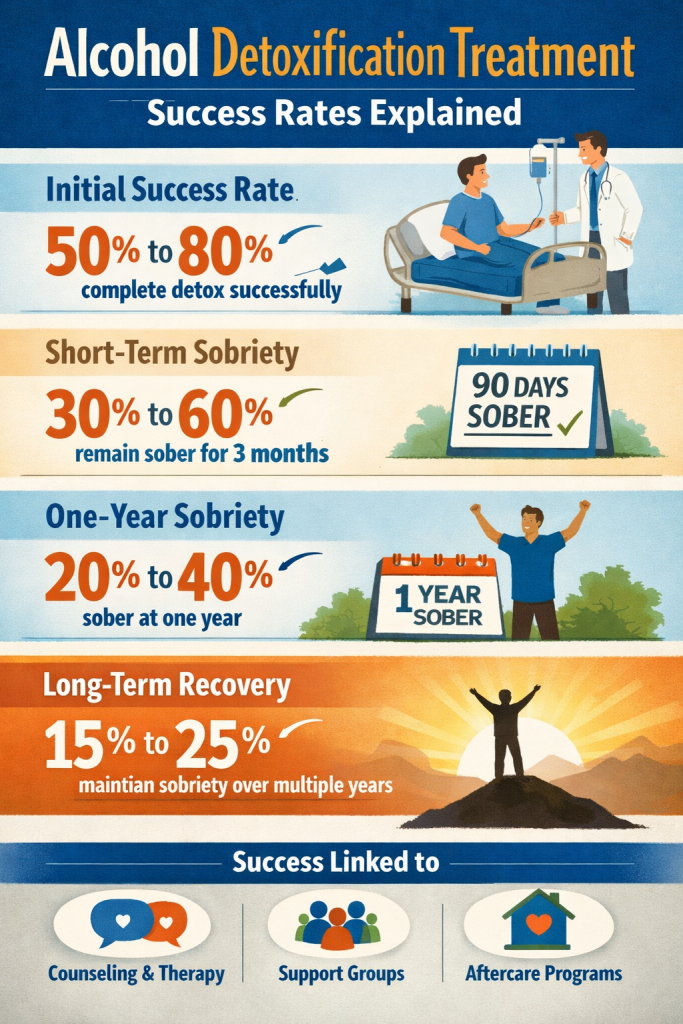
From this angle, meditative withdrawal treatment programs also tend to register a very high success rate at the outset especially when contrasted with unsupervised detox or home based treatments. Among those, however, long-term recovery success relies on what happens after detoxification — in the process of retraining the brain to cope with stress and triggers so it’s no longer dependent on opiate molecules.
Top Contributors That Impact the Success Rate of Alcohol Detox
Alcohol Consumption (Severity and Duration)
People who drink alcohol heavily and every day will usually have more severe withdrawal symptoms. This can impact how long or hard detox is but there’s no reason for the detox to be a failure. The impact of appropriate medical supervision is important for safety and effectiveness.
Overall Physical and Mental Health
Concomitant diseases, such as liver disease, cardiovascular problems, anxiety or depression can affect the detoxification results. Rigorous medical evaluation helps ensure that these issues are appropriately targeted during treatment.
Professional Medical Supervision
Detox is much more successful in a medical environment. In programs where a person can receive Alcohol detox in Islamabad, with continuous monitoring, medication administration and medical professionals increases the safety of withdrawal and the chance to become stable.
Patient Engagement and Support
It is very much to do with motivation, understanding around the process, and support from professionals or family. Psycho-oncological aspects of liver cancer MP#2 Detox results are more favorable when patients feel well informed, respected and supported.
Detox of Alcohol in islamabad: A clinical review
There is an increasing demand for Alcohol detox in Islamabad today because mental health awareness is on the rise and so is addiction treatment. The activity of detoxification in the area is done according to a well-defined protocol matching international medical norms.
These programs often include:
- Initial medical and psychological assessment
- Individualized detox plans
- Use of approved medication to manage symptoms as needed
- Continuous observation for safety
- Preparation for rehabilitation or counseling
Final success rates are typically high if the detox is done with medical oversight – again, focusing on safety and stabilization rather than an “easy-out” promise.
Detox vs. Long-Term Recovery: Why the Distinction Matters
One of the most fatal misconceptions about alcohol detox that exists is thinking it equates to recovery. Definiton and Symptoms Detox is only a partial treatment, as alcohol use disorder has physical, psychological, behavioural and social dimension.
Without follow-up treatment such as:
- Inpatient or outpatient rehabilitation
- Counseling or psychotherapy
- Relapse prevention planning
- Lifestyle and behavioral changes
…there still is considerable risk of relapse. So detox success should really just be seen as a successful start, not the end all.
A Continuum of Care Model & Why it Matters overall Success of Recovery
The research and clinical experience are clear: Patients who stay in treatment after detox do far better in the long run. Detox establishes a window of opportunity where patients are more amenable to learning and therapy.
Some of the advantages of continuing care are:
- Better understanding of addiction triggers
- Development of coping strategies
- Improved emotional regulation
- Reduced relapse risk
Centers providing alcohol detox in Islamabad frequently stress this continuum of care to reinforce lifelong sobriety.
There are some misconceptions about alcohol detox success
“Detox by itself will produce a lifetime without alcohol use.”
Detox takes care of withdrawal, but it does nothing to cure the underlying addiction.
“If the withdrawal is mild, you don’t need treatment”
With this disease, even mild symptoms can suddenly spiral out of control. Medical oversight ensures safety.
“Relapse means detox failed”
Relapse is a signal that you need to continue or change treatment, not evidence that you have failed.
Knowing these facts can help one come to treatment with a more realistic outlook and more positive mind set.
Frequently Asked Questions (FAQs)
1. What is the average length of alcohol detox?
The 5- to 10-d duration of alcohol detox is determined by the patient’s health, drinking history, and withdrawal severity.
2. Is it dangerous or painful to detox from alcohol?
Withdrawal also can be unpleasant and even physically hazardous if not properly supervised. Under medical detox, you mitigate the risks and the pain.
3. Does medical detox result in higher success rates than home detox?
Yes. In short, medical detox rates the safest and most effective for stabilizing patient because patients are monitored by persons who can intervene as necessary.
4. The hanging question is – Will detox prevent any future alcohol cravings?
Detox eliminates physical dependence, though cravings remain. On a long-term basis therapy and rehab will have to be used for cravings.
5. Who should consider Alcohol detoxing in Islamabad?
Those who are physically dependent on alcohol, experiencing withdrawal or struggling to safely stop using alcohol would do well to explore professional detox.
Conclusion
Alcohol DetoxGiven the detrimental effects of long-term alcohol use, physiological dependency is common and detox from alcohol can be a necessary and even life-saving step for those who are dependent on alcohol. Detox completion rates are high when measured in terms of medical safety and stabilization, particularly in professionally facilitated settings. For those looking for Alcohol detox in Islamabad, it’s important to remember that the detox cycle is a staging ground — Not the final destination – of recovery.
The real victory is then in coupling detox with continuing care, emotional support and long-term treatment planning. Realistic expectations, ethical medical management and an organized plan of care can make detoxification a good foundation for meaningful recovery.