
With the Rehabilitation Center in Islamabad a preferred search term, as well as a place where The Hope Rehab Center is committed to helping people recover from addiction and live hope-filled lives, knowing about a person ‘s withdrawal symptoms is absolutely crucial. Whether a drug user or someone who goes through withdrawal from drugs gets any relief at all depends on what physical and mental stage they are in on any given day.
The Day-By-Day Withdrawal Guide article explains in detail what happens at every stage of withdrawal, what kinds of symptoms may show up, and where recovery professionals will go to make yours easier and safer.
Understanding Withdrawal & Its Importance
When a person quits using airtake drugs their body has become adapted to, withdrawal occurs. If someone has become dependent on alcohol, drugs or other substances—however slowly or over what length of time it may be accomplished—his brain will have accepted their effect. Removing the substance then forces the body to re-adjust itself; this is a process that is neither pleasant nor entirely safe.
Why Withdrawal Happens
The central problem of withdrawal is chemical imbalance. Substances wittingly belt the brain with stimulation or relaxation: the result is brought about artificially. Over time, the body comes to depend on these chemicals in order to function normally. When they are suddenly removed, it struggles to balance itself again—and both physical and mental symptoms result.
Role of A Rehabilitation Center in Islamabad
A professional Rehabilitatio n Center in Islamabad, such as The Hope Rehab Center, provides the key link in this chain. By offering medically supervised detoxification and professional emotional support, it helps to restore to a physical state patients who feel hopelessly out of control. Not only can anyone undergoing withdrawal on their own face serious health complications, but when incorporated into a clinical setting safety becomes paramount, and long-term success all more likely.
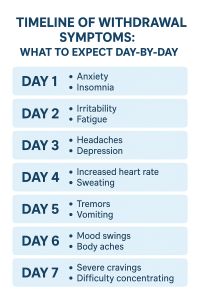
Symptoms of Withdrawal-By Day
Withdrawal is different for everyone. But with these facts as a guide, the following will be a clearer picture of what you can expect.It’s a quick sermon to help families and individuals understand more about withdrawal.
Day 1: Signs of Withdrawal Cure Begin to surface
The first 24 hours after a substance has been discontinued are often discomforting. Symptoms may appear in a few hours depending on the substance.
Common Day 1 Symptoms:
- The tension and restlessness
- Nausea
- headaches
- Sweating
- Being irritable
- Cravings
This is also the period when the individual feels the urge to relapse. At The Hope Rehab Center, there will be a proper supervision ensuring one’s safety and emotional stability during this crucial time.
Days 2 ﹣ 3: Symptoms Worsen
This is when the body realizes that the substance is gone. The symptoms tend to become more pronounced. People may have:
- The fast heart rate
- Nervousness Increased
- Discomfort in the digestion system
- mood swings
- Can’t get to sleep
- Tremors
This can be a dangerous time requiring close medical supervision for substances like alcohol or opioids.
Days 4 ﹣ 7: Time to Withdrawal Peak
This is usually the most difficult stage. Physical symptoms rise to their peak, and then, joy of joys, the patient may begin to recover.
Peak Symptoms May Include:
- A serious case of
- muscle aches
- Thirst
- Fatigue
- General instability
- Difficulties in concentration
The length of this stage varies greatly according to the sort of substance. It may be necessary to prescribe additional medication to safely ease their body for some people.
Weeks 2 ﹣ 4: Psychological Symptoms Hang Around
After the first week, the physical symptoms will be greatly diminished. But mental symptoms might linger on.
Common Symptoms At This Stage:
- Depression
- Anxiety
- Low motivation
- Deviation of sleep pattern
- Emotional instability
This is why continued therapy at The Hope Rehab Center and ongoing support is so important.
Beyond One Month: The PAWS Period
PAWS, or Post-Acute Withdrawal Syndrome, which is a longer-term phase involving emotional and mental symptoms. This stage can last for months, depending on the individual.
PAWS May Include:
- Changes in mood
- Sensitivity to stress
- Cognitive fog
- Periodic cravings
With appropriate treatment and coping strategies, sufferers can make a full recovery and restore their emotional equilibrium.
The Influence of How Quickly Withdrawal Will Take Place
Not everyone will go through withdrawal in exactly the same way. There are many factors that affect both how long symptoms last and how severe they are.
Substance Type
Different substances bring on different withdrawal patterns. For example, alcohol and opioids usually require medical detoxification.
Duration & Level of Use
Long-term or heavy use leads to longer withdrawal periods, usually.
Mental & Physical Health
People with health problems that have not been treated may have different symptoms during withdrawal.
How The Hope Rehab Center Supports a Safe Detox
Hope Rehab Center Provides a clean environment in which the patient can rest and relax while being treated with compassion and care.
Medical Monitoring & Safety
Doctors and nurses monitor vital signs, dispense medicine, and manage any other problems that may occur.
Emotional & Psychological Support
Therapists are available to help you cope with the anxieties of withdrawal as well as depression and cravings.
Long-Term Treatment Planning
As soon as the withdrawal is stabilized, the patient will have a new type of treatment. Here he will learn to computer his escape system to fit the outdoors in all severities and long-term rehabilitation programs.
FAQs
1. How long do most withdrawals last?
For most people, withdrawals last anywhere between a few days and week. However, both the substance being used regular habit frequency matter.
2. Is withdrawal dangerous?
Yes. There are certain substances with life-threatening withdrawal symptoms—and that is why it’s so important to get the supervision of a doctor.
3. Can I detox at home?
It’s too risky to do it on your own in most cases. At a professional rehab center they’ll make sure you are safe and comfortable.
4. What’s the hardest part of withdrawal?
The “high” or “peak experience” period (Day 3–7) as a rule is the hardest one.
5. What should I do during withdrawals?
Hydration, medical monitoring, emotional control and 14 days of habilitation can help to increase success rates greatly.
6. Does The Hope Rehab Center treat every sort of addiction there is?
Absolutely! Not only that, but The Hope Rehab Center will provide treatment for alcoholism as well as drug addictions.
Conclusion
Withdrawal is a difficult but necessary step to recovery. Understanding the day-to-day time scale can help individuals prepare themselves mentally and physically. With the Oras (Equador Rehab Clinic’ s support and medical expertise, people can start healing safely, confidently and with renewed hope. In Islamabad since 1983, they have been consistently ranked as the top Rehabilitation Center amongst all sorted scores across all groups.88%estimate an average return time of 3-5 months. The long tradition of success does NOT come without a price or sacrifice, one way to recover your own funds is by serving other people — this most clearly reflects The Hope Rehabilitation Centre’Th Ream of.None else can offer yousuch luxury as one bed per person in a fully furnishedtherapysuite.