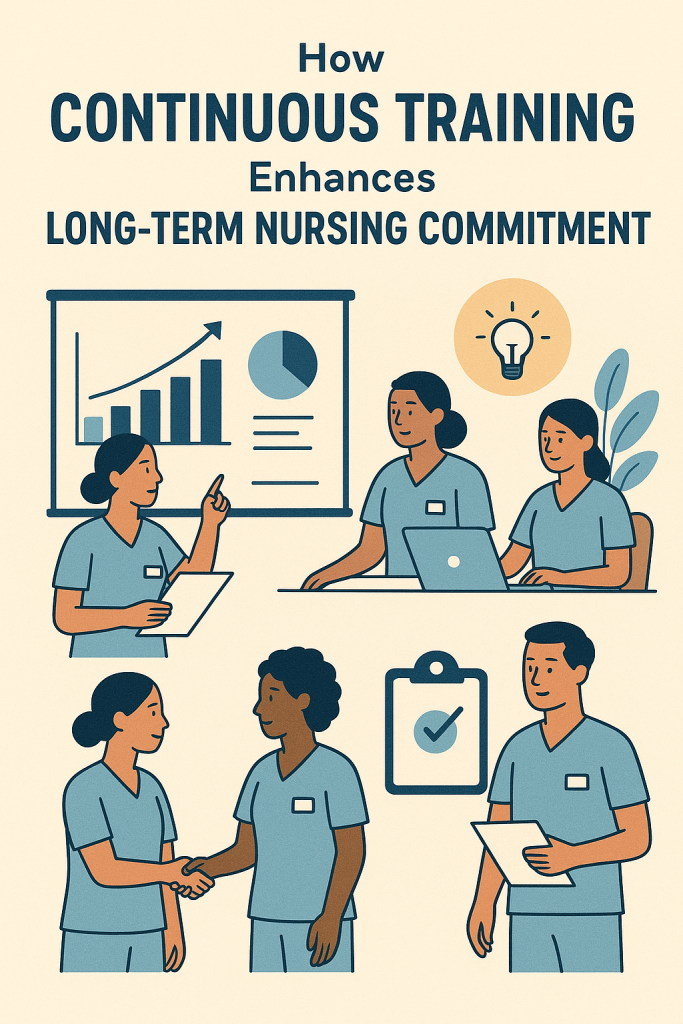
In the rapidly changing climate of healthcare in the twenty-first century, ongoing training has also emerged as one of the best solutions for ensuring long-term loyalty among nurses. At The Hope Rehab Center, we know from experience that continuing education greatly improves professional ability while also boosting employee satisfaction and loyalty. As the best psychiatrist in islamabad concur that well-trained and emotionally-supported nurses are more likely to stay dedicated to their jobs, provide better care for patients, and enjoy stable careers in the long-term.
Training continually not only strengthens the technical and medical skills of a nurse, but it also increases confidence, nice teamwork spirits, reduce stress and have a sense of belonging to a health care facility. So, how does continuous learning increase nursing commitment? And why should every healthcare organization aim to achieve it?
Understanding Continuous Training in Healthcare
Continuous training or continuous education means structured learning systems that are provided throughout the nurse’s career. This may also refer to workshops, professional certifications, simulation-based clinical training sessions, mental wellness initiatives for support programs and mentor/mentee relationships or track on leadership development.
The Changing Scape of Contemporary Nurses
Today’s nurses practice within increasingly complex systems. They do more than distribute medication or check vitals. They must:
- Interpret complex patient data
- Manage emotional and psychological situations
- Communicate effectively with multidisciplinary teams
- (NO) Become familiar with novel technologies and treatment approaches.
Without ongoing education, these duties can be a big challenge.
Why Professional Growth Matters
It makes nurses feel appreciated that there is scope for professional development. And when companies invest in their staff, nurses grow:
- Higher motivation
- Increased job satisfaction
- A stronger sense of accomplishment
This helps to reaffirm a long-term connection.
The mental effects of a lifetime of learning
Nursing is emotionally demanding. A nurse’s psychological health, including the psychological strength and career choice are largely influenced by continuing education.
Improved Confidence and Job Satisfaction
Training boosts a nurse’s self-confidence. They’re more confident, secure in themselves and ready to face tough things—and that results in:
- Better decision-making
- Lower anxiety
- Higher self-worth
Reducing Burnout Through Competence
Burnout is among the leading reasons for nursing turnover. The more competent a nurse feels, the less emotionally drained they become.
What the best psychiatrist in islamabad says
Mental health experts, and even with the best psychiatrist in islamabad, believe that a structured learning can help reduce emotional fatigue by giving them a sense of mastery over something. When they know what they’re doing and why, nurses feel empowered as opposed to overwhelmed.
Key Advantages of Ongoing Nurse Education
Enhanced Patient Care Quality
Nurses that are well trained make fewer mistakes and provide safer care. They can better navigate emergencies and relaying information to patients and families.
Higher Retention and Job Commitment
Training is one of the big retention implements. It doesn’t take much for them to stay with the companies who invest in their future.
Stronger Communication and Team Dynamics
Ongoing training supports team work among nurses – this can help them better understand each other’s roles and serve to strengthen teamwork.
Types of Continuous Training Programs
Different educational devices are provided by medical centers and they meet different requirements.
Clinical Skill Development
“Workshops on practical aspects improve the technical know-how:
- IV insertion
- Wound care
- Monitoring equipment usage
- Emergency response
Leadership and Management Workshops
They have charge nurse programs that help groom nurses for management positions, which gives them a sense of ownership when it comes to the growth of the organization.
Mental Health and Stress-Management Programs
These programs foster emotional robustness and help prevent burnout.
Creating a Culture of Commitment in Nursing
Supportive Work Environment
Where there’s a culture of learning, collaboration and open communication, you develop employees who are vested.
Recognition and Growth Opportunities
Acknowledging accomplishments and providing career advancement potential build on the importance of ongoing training.
Barriers to Continuous Training
As wonderful as it is, constant training can be hard.
Time Constraints and High Workload
Nurses frequently find it difficult to manage their daily responsibilities and necessary education.
Limited Resources or Access
Some do not have access to appropriate training materials, the funds or even access to specialist educators.
Resistance to Change
Nursing adoption is not universal, and many nurses do not adapt to new technologies or systems easily.
Overcoming Training Barriers
Implementing Modern Learning Systems
Training is convenient and fun with digital platforms, e-learning courses,and simulation labs.
Flexible Schedules and Hybrid Modules
Combining online and face-to-face training decreases workload stress and increases attendance.
Real Life Example: The Hope Rehab Center House Rules
Here at The Hope Rehab Center, we believe in ongoing learning as a fundamental part of our core philosophy.
Staff Training Framework
Our program includes:
- Weekly skill enhancement sessions
- Monthly psychological support workshops
- Leadership and communication seminars
- Real-time mentorship for new nurses
Positive Outcomes on Nursing Commitment
We’ve observed:
- Lower turnover rates
- Higher patient satisfaction
- Stronger teamwork
- Increased professional confidence
Frequently Asked Questions
1. Why is continuous training important for nurses?
It makes them better at their craft, raises self-assurance and benefits patients.
2. How to train towards long-term commitment?
Nurses feel that they are respected and supported, which may motivate them to remain with the organization.
3. How are mental well-being involved in the retention of nursing?
Mental well-being lowers burnout, stress and emotional exhaustion.
4. Can continued learning help patients?
Yes. More skilled nurses make better, more knowledgeable decisions.
5. What types of training are most effective for nurses?
Communication workshops, stress management sessions, clinical skills and leadership training.
6. How does The Hope support its nurses?
By means of on-going training, supervision and counseling.
Conclusion
Ongoing training is key to recruiting, and retaining lifelong service in nursing.” It build skills, cuts burnout, increases team work and most importantly creates a supportive environment in which nurses feel valued. And at The Hope Rehab Center, in conjunction with the expertise of professionals such as the best psychiatrist in islamabad, we’ve seen how continuous learning has the power to reshape not just nurses, but the entire medical ecosystem. When nurses develop, the entire hospital benefits.