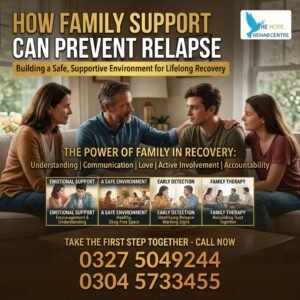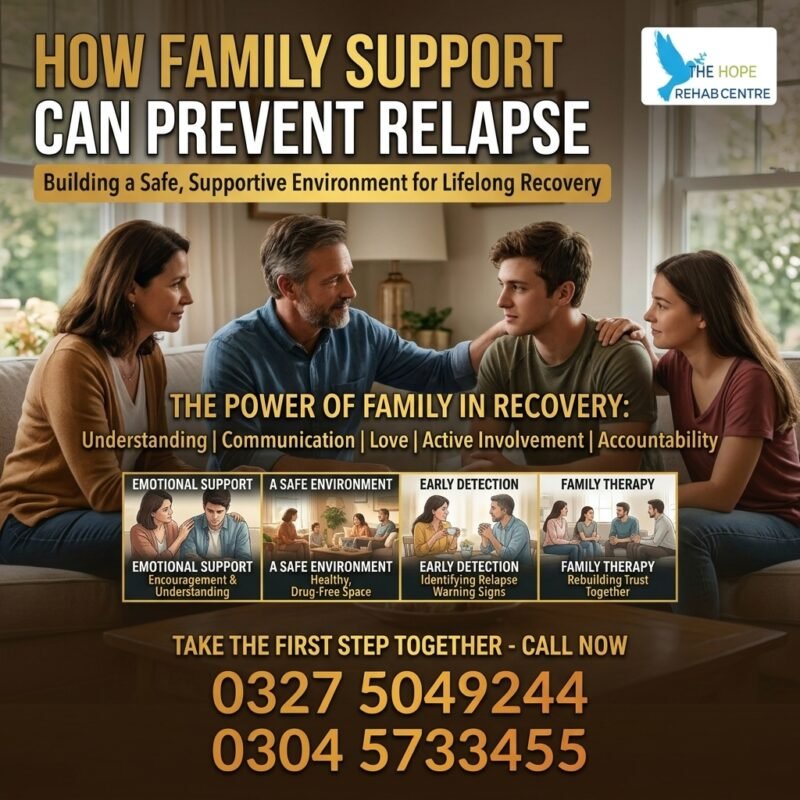
Addiction and mental health disorders touch the family, friends and loved ones of every person who experiences them. Family members frequently endure emotional pain, confusion and uncertainty as they seek to support a loved one in recovery. Family support has a role as family-centered treatment to fit the patient and family for managing the treatment process, facilitating to ameliorate dysfunctional relationships between them.
A professional rehabilitation facility will treat family involvement as a major part of the recovery plan. Family involvement programs can help build communication skills, emotional literacy and a safe space for the healing to take root long after the experience. One of the most trusted Best rehabilitation center in Islamabad, Pakistan understands that recovery is more effective when family members are informed, involved and supported.
Family Support Programs at The Hope Rehabilitation Center Islamabad Pakistan are Not only to educate, and support the family members, it is ensured that the whole process should be done in confidence with maintaining the patient confidentiality and ethical care principles.
The Role of Family in Substance Abuse Recovery
Recovery from substance use disorders and mental health challenges is almost never a solitary endeavor. Family provides guidance, stability and motivation for individuals during treatment. But family members themselves may not understand addiction or mental health conditions.
A systematic family support program can help scaffold the process as it educates families on things like addiction, treatment options and recovery roadmaps. This is an ideal facility that also provides families the ability to better understand what their loved one is going through.
Family education is a tool for reducing persistent misunderstandings and replacing blame, shock or frustration with empathy and constructive support.
Top Components of a Family Support Program
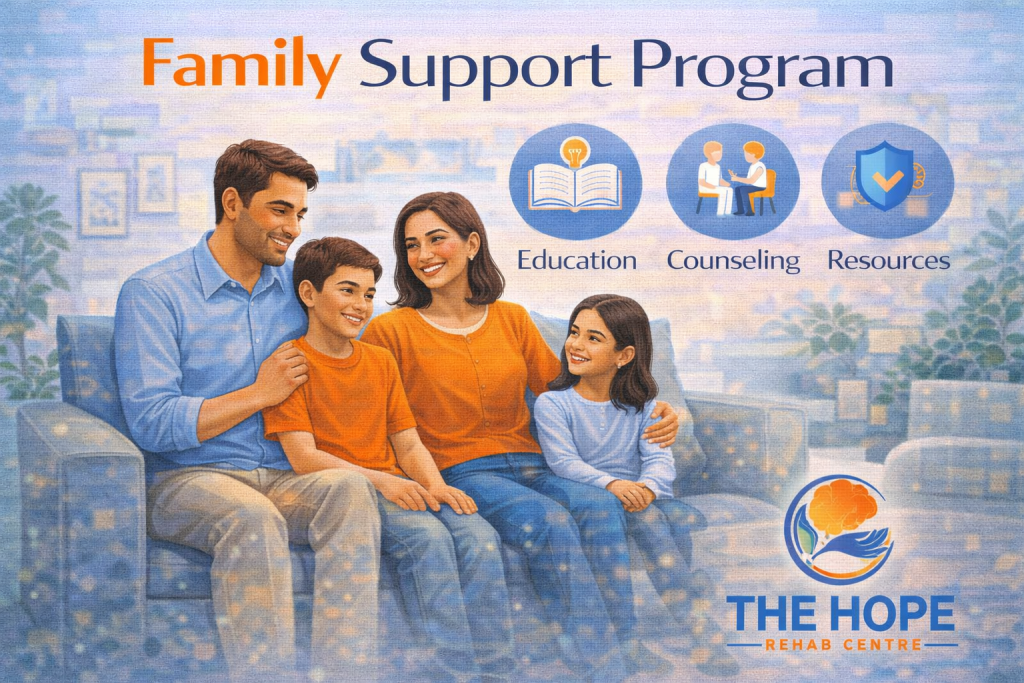
Most family support programs consist of multiple components that help the household build communication and emotional resilience.
Educational Sessions
The goal of educational sessions is to inform clearly about addiction, mental health disorders, and the recovery process. Families learn about frequent symptoms, triggers and coping strategies that might support their loved one’s progress.
At The Hope Rehabilitation Center Islamabad, Pakistan, these sessions are designed to help families understand the way treatment works and the need for professional care during recovery.
Family Counseling
Family counseling enables family members to share concerns and emotions and rebuild trust in a safe space. A trained therapist facilitates these dialogues, supporting families as they work through conflicts and establish healthier patterns of communication.
Improving understanding of each other is often at the focus of family counseling sessions at a Best rehabilitation center in Islamabad, Pakistan
Emotional Support for Families
Families can also experience their own stress, anxiety or guilt about helping someone in recovery. Support programs create a safe space for relatives to talk about their experience and learn how to cope with these feelings.
Families are encouraged to stay strong and be positive through the recovery process.
Improving Communication Within the Family
Nothing can be better than a healthy communication and that is what a family support program helps in ensuring for the longest of times. Addiction issues and mental health can cause some misunderstandings or strained relationship.
Guidelines that promote clear and respectful communication are regularly taught to families in rehabilitation centers. These techniques may include:
- Active listening
- Setting healthy boundaries
- Expressing concerns calmly and constructively
- Encouraging positive behaviors
When families master these skills, they are able to establish an environment that fosters recovery rather than inadvertently amplifying stress.
At The Hope Rehabilitation Center Islamabad, Pakistan therapists work closely with family to help them restore trust in their relationships and use healthier ways of relating.
Families Can Help — and Have a Role in Preventing Relapse
Preventing a relapse is a key aspect of lifelong recovery. Families who recognize the warning signs of relapse can help promote early intervention should challenges arise.
In fact, a Best rehabilitation center in Islamabad, Pakistan usually advice the person to overcome potential triggers like emotional stress, time pressure or environmental influences.
Families might also learn practical ways to support recovery at home, like encouraging healthy routines and maintaining open communication and regular follow-up therapy sessions.
Patients feel more supported and are often more motivated to continue making progress when their families are involved in the recovery process.
Creating a Supportive Home Environment
A stable and supportive home environment can play a huge role in successful recovery. Social supports from people who understand the struggles with addiction/mental health conditions are better able to give encouragement and patience.
Thus at The Hope Rehabilitation Center Islamabad Pakistan family programs strengthens positive lifestyle change among patients and their families. These can include enforcing daily routines at home, encouraging healthy behaviors, and maintaining a calm and respectful environment in the home.
By creating a nurturing environment, recovering people can concentrate on self-improvement while feeling safe within the family structure.
Understanding the Long-Term Benefits of Family Support Programs
Family System VS Substance habit Family support program not only helps while treatment but also helps the long term recovery. Having a strong family can contribute by providing emotional stability that can help in reducing further relapses.
Ongoing family involvement, up at a Best rehabilitation center in Islamabad Pakistan significantly reinforces the progressive developments made in rehabilitation. Open dialogue and addressing these shifts can help families lay a better foundation for long-term recovery.
In turn, all these also often result in healthier relationships with others, better emotional conditions of family members as well as overall stability of the home environment.
Frequently Asked Questions (FAQs)
1. Family Support Program At REHAB, What is a family support program in rehabilitation?
A family support program teaches and guides loved ones so that they can gain insight into addiction, mental illness, and the recovery process.
2. Why is family involvement important in recovery?
Family involvement aids emotionally, enhances communication, and fosters an environment conducive to progress especially during treatment.
3. Would family members be able to join in on counseling sessions?
Yes. Numerous rehabilitation centers provide family therapy sessions in which relatives and patients can discuss their issues to restore trust with a professional’s help.
4. How do family programs prevent them from relapsing?
Family programs educate relatives on recognizing warning signs, managing stress in the home and promoting healthy routines that underpin long-term recovery.
5. Are family support programs confidential?
Yes. Professional rehabilitation centers follow confidentiality policy strictly, and guarantee that everything discussed is kept private and respectful within therapy sessions.
Conclusion
The Importance of Family Support Programs in Recovery Family support programs are… These programs provide a solid groundwork for continuing healing through the education of loved ones, enhanced interaction and added emotional bonding.
Best rehabilitation center in Islamabad, Pakistan Our trusted professionals know that recovery is more than personal treatment; When families are informed and engaged, they can help support a stable environment that fosters progress and resilience.
Family support programs at The Hope Rehabilitation Center in Islamabad Pakistan demonstrates compassion professionalism and respect for each patient’s unique journey By educating families and individuals, counseling them together, and providing support over time, lasting recovery is possible with healthier relationships.