Recovery from addiction is an ongoing journey that often requires patience, commitment, and a strong support system. While professional treatment plays an important role, family support can also make a meaningful difference in a person’s recovery. Encouragement, understanding, and a stable home environment can help individuals manage challenges, develop healthier habits, and reduce the risk of returning to substance use.
Relapse can occur during recovery, but it does not mean that treatment has failed or that progress has been lost. Understanding how families can respond to warning signs, encourage healthy coping strategies, and support continued treatment can help create a stronger foundation for lasting recovery.
At The Hope Rehabilitation Center Islamabad, Pakistan, families exploring addiction recovery can benefit from learning about the role of supportive relationships in the recovery process.
Understanding Relapse in Addiction Recovery
Relapse refers to a return to substance use after a period of reduced use or abstinence. Recovery is different for everyone, and setbacks can sometimes occur as individuals learn to manage cravings, stress, emotional difficulties, and environmental triggers.
Common factors that may increase the risk of relapse include:
- Stress, anxiety, or depression
- Contact with people or environments associated with past substance use
- Social isolation or relationship conflict
- Strong cravings or withdrawal-related difficulties
- Stopping treatment or recovery support prematurely
- Overconfidence about managing triggers without support
Relapse prevention involves identifying these risks, developing coping strategies, and seeking help early. Family members can contribute by creating an environment that encourages honesty, stability, and professional support.
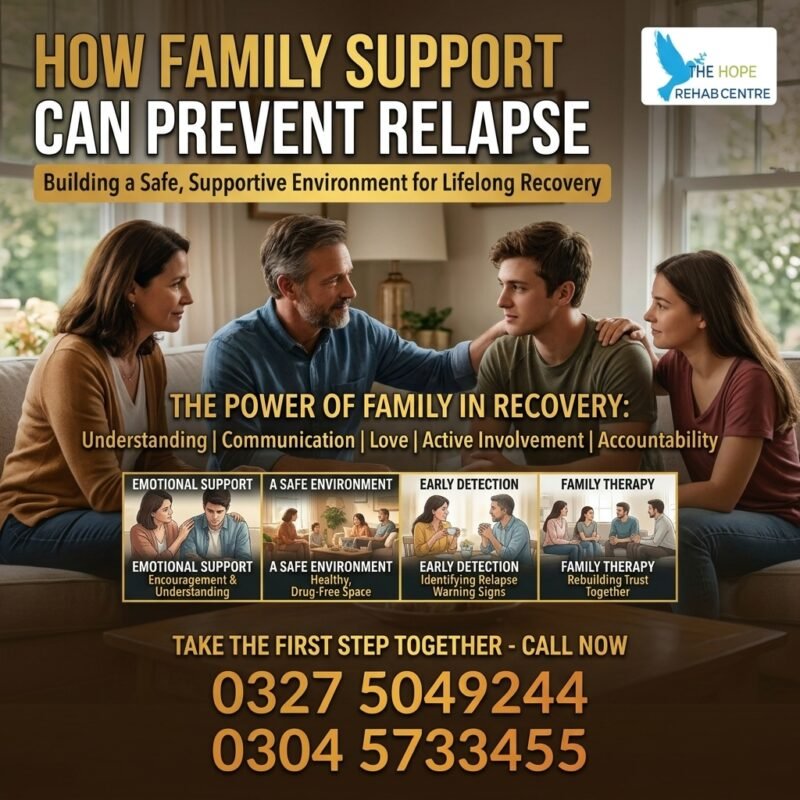
1. Providing Emotional Support Without Judgment
People recovering from addiction may experience shame, guilt, anxiety, or fear of disappointing their loved ones. Criticism and constant blame can make it harder for them to discuss difficulties openly.
Family members can provide emotional support by listening patiently, acknowledging progress, and encouraging honest conversations. Rather than defining someone by their addiction, families can recognize the person’s effort to make positive changes.
Helpful statements include:
- “We want to understand what you’re going through.”
- “You don’t have to handle every challenge alone.”
- “Let’s talk about what support would help you right now.”
A supportive approach does not mean ignoring harmful behaviour. Families can remain compassionate while setting clear expectations and boundaries.
2. Recognizing Early Warning Signs of Relapse
Relapse may develop gradually, and changes in behaviour or emotional well-being can sometimes signal that additional support is needed. Family members who understand these warning signs may be able to encourage early intervention.
Potential warning signs include:
- Increased secrecy or withdrawal from loved ones
- Returning to people or places associated with substance use
- Missing counselling sessions or recovery appointments
- Increased irritability, anxiety, or mood changes
- Neglecting sleep, meals, work, or personal responsibilities
- Talking about substance use as a way to escape stress
These signs do not prove that relapse will occur. They may reflect other challenges, including mental health concerns. Families should approach such changes with curiosity and care rather than accusations.
If concerns arise, a calm conversation and contact with the person’s treatment professional may help determine the next steps.
3. Encouraging Continued Treatment and Recovery Support
Completing a rehabilitation programme is an important milestone, but ongoing care may still be necessary. Counselling, follow-up appointments, peer support groups, and appropriate medical care can help individuals maintain progress after treatment.
Family members can help by encouraging attendance at appointments, helping organize transportation when needed, and respecting the person’s treatment plan.
They should avoid changing prescribed medications, making treatment decisions on the person’s behalf without appropriate involvement, or assuming that professional support is no longer necessary simply because the person appears to be doing well.
Consistent aftercare can help individuals respond more effectively to challenges before they become overwhelming.
4. Creating a Healthy and Stable Home Environment
The home environment can influence recovery. Frequent conflict, exposure to substances, unpredictable routines, and ongoing stress may make recovery more difficult.
Families can help create stability by:
- Establishing predictable daily routines
- Encouraging healthy sleep and eating habits
- Keeping alcohol or other substances away from the recovering person where appropriate
- Planning substance-free family activities
- Communicating respectfully during disagreements
- Supporting positive hobbies, education, work, and social connections
A peaceful home does not need to be perfect. What matters is creating a safer environment where recovery is respected and challenges can be discussed constructively.
5. Helping Manage Stress and Triggers
Stress is a common challenge during addiction recovery. Financial pressures, relationship difficulties, loneliness, and social situations can sometimes increase cravings or emotional distress.
Families can help individuals identify their triggers and practise healthier responses. These may include going for a walk, contacting a trusted support person, attending a recovery meeting, practising relaxation techniques, or discussing difficult feelings with a counsellor.
It is also important to respect personal responsibility. Family members can offer encouragement and practical help, but they cannot control another person’s thoughts, choices, or recovery outcomes.
6. Setting Healthy Boundaries
Supporting a loved one does not mean accepting every behaviour or protecting them from all consequences. Healthy boundaries help maintain safety, trust, and stability for everyone involved.
Examples include refusing to provide money that may support substance use, not allowing substance use in the home, and seeking professional guidance when behaviour becomes threatening or unsafe.
Boundaries should be communicated clearly and consistently. They work best when they focus on what family members can control, rather than using threats, humiliation, or punishment.
Families should also remember that they cannot force recovery. Their role is to support positive choices while protecting their own physical and emotional well-being.
7. Participating in Family Counselling and Education
Addiction can affect the entire family, sometimes creating misunderstandings, resentment, and communication difficulties. Family counselling can help loved ones understand addiction, develop healthier communication skills, and address relationship concerns.
Education can also help families recognize that addiction is a complex health condition rather than simply a moral failing. Learning about cravings, relapse risks, treatment options, and recovery expectations can make it easier to provide informed support.
Family members may benefit from their own counselling or support groups, particularly if they are experiencing stress, exhaustion, or emotional distress.
Family Support at The Hope Rehabilitation Center Islamabad, Pakistan
Families seeking information about addiction recovery can explore support options through The Hope Rehabilitation Center Islamabad, Pakistan. When considering care, it is helpful to ask about assessment, treatment planning, family education, counselling options, and follow-up support, as appropriate to the individual’s needs.
Family involvement should be guided by the recovering person’s clinical needs, privacy, and consent, while prioritizing safety. A coordinated approach involving the individual, family members, and qualified professionals may help address challenges and strengthen recovery planning.
Frequently Asked Questions
1. Can family support help prevent addiction relapse?
Yes. Encouragement, healthy communication, practical assistance, and support for continued treatment may help reduce some relapse risks. However, family support cannot guarantee that relapse will not occur.
2. What should a family do if a loved one shows signs of relapse?
Approach the person calmly, describe specific concerns without blame, and encourage contact with their treatment professional. If substance use has resumed, seek guidance promptly and review the existing recovery plan.
3. Should families monitor a recovering person’s behaviour?
Families can express concerns and agree on reasonable boundaries, but excessive monitoring or invading privacy may damage trust. Open communication and mutually agreed recovery plans are generally more constructive.
4. Is family counselling helpful during addiction recovery?
Family counselling can improve communication, address conflict, and help loved ones understand addiction and recovery. Its suitability depends on the family’s circumstances, individual preferences, and safety considerations.
5. What if family relationships are stressful or unsafe?
Support can come from trusted friends, counsellors, peer support groups, healthcare professionals, or other safe people. If there is violence, coercion, or a threat to anyone’s safety, prioritize safety and seek appropriate professional assistance.
Conclusion
Family support can play an important role in addiction recovery by providing encouragement, recognizing potential warning signs, supporting continued treatment, and helping create a healthier home environment. Compassionate communication and clear boundaries can make it easier to address challenges without shame or blame.
At the same time, preventing relapse is not solely the family’s responsibility. Recovery requires an individualized approach that may include professional treatment, ongoing support, and personal coping strategies. With informed family involvement and appropriate care, individuals can continue building healthier routines and working toward long-term well-being.
For families exploring addiction recovery options, The Hope Rehabilitation Center Islamabad, Pakistan, can be a starting point for learning about available support and appropriate next steps.