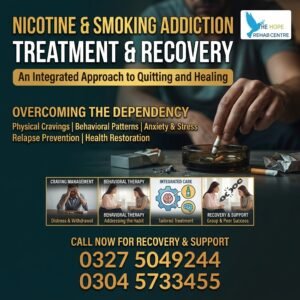
Nicotine and smoking addiction can affect physical health, emotional well-being, and everyday life. Nicotine is an addictive substance found in tobacco products, including cigarettes. Repeated use can lead to dependence, making it difficult to stop even when a person wants to quit.
Many people try to quit smoking several times before finding an approach that works for them. This does not mean they lack willpower. Nicotine dependence involves changes in the brain, physical withdrawal symptoms, established habits, and environmental triggers. With appropriate treatment and ongoing support, people can work toward a smoke-free life.
For individuals and families seeking addiction-related guidance, The Hope Rehabilitation Center Islamabad, Pakistan, provides a setting to explore support options and understand the recovery process.
What Is Nicotine Addiction?
Nicotine addiction occurs when a person develops a strong physical or psychological dependence on nicotine. Nicotine reaches the brain quickly and activates reward pathways, reinforcing the urge to use tobacco again.
Over time, people may associate smoking with specific activities, such as drinking tea, taking breaks, driving, or managing stress. These routines can make quitting more challenging even after the initial physical withdrawal begins to improve.
Nicotine dependence can develop through cigarettes and other nicotine-containing products. The health risks vary by product, but smoking combustible tobacco exposes the body to harmful chemicals that can cause serious disease.
Common Signs of Smoking Addiction
Recognizing nicotine dependence is an important step toward seeking help. Common signs include:
- Strong cravings for cigarettes or nicotine
- Difficulty reducing or stopping use
- Smoking soon after waking up
- Feeling irritable or restless without nicotine
- Continuing to smoke despite health concerns
- Making repeated unsuccessful attempts to quit
- Spending significant time or money on tobacco
- Returning to smoking after a period of abstinence
A person does not need to experience every sign to benefit from quitting support.
Health Effects of Smoking
Smoking is associated with serious health risks, including lung cancer, heart disease, stroke, chronic obstructive pulmonary disease (COPD), and other respiratory illnesses.
It can also affect circulation, oral health, fertility, and wound healing. Exposure to secondhand smoke can harm other people, including children and family members.
Quitting smoking can improve health at any age. Some benefits begin soon after stopping, while longer-term benefits continue to develop over time.
Understanding Nicotine Withdrawal
When someone stops or reduces nicotine use, withdrawal symptoms may occur. These symptoms are usually uncomfortable rather than medically dangerous for most people.
Common symptoms include:
- Strong nicotine cravings
- Irritability or frustration
- Anxiety or restlessness
- Difficulty concentrating
- Sleep disturbances
- Increased appetite
- Temporary changes in mood
Symptoms often begin within hours of stopping, may be strongest during the first few days, and generally improve over the following weeks. The timeline varies from person to person.
Understanding withdrawal can help people prepare for challenging moments instead of interpreting cravings as a sign that quitting is impossible.
Effective Smoking Addiction Treatment Options
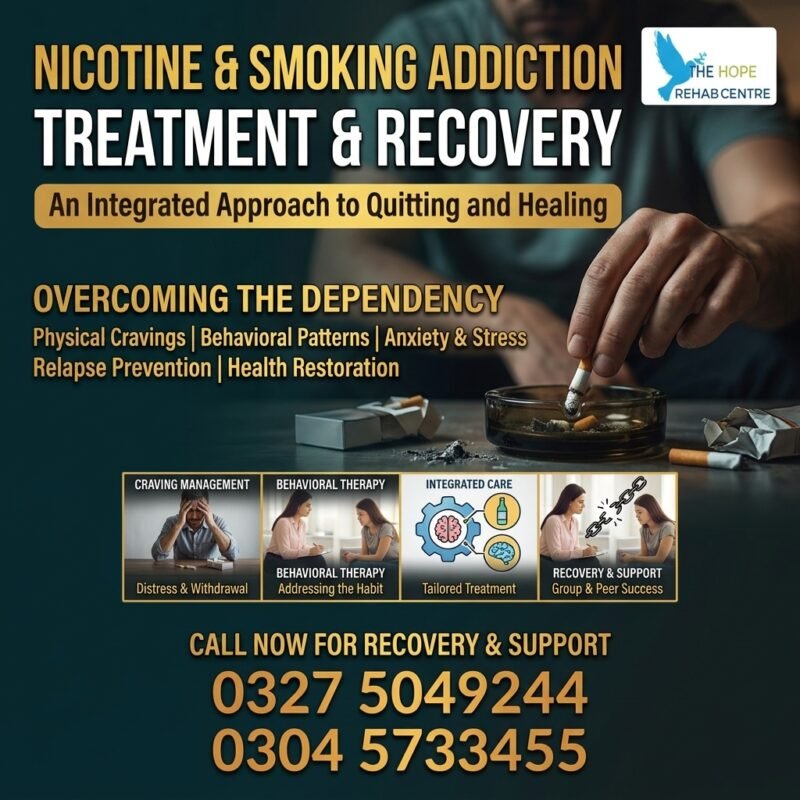
A combination of behavioral support and medication can improve the likelihood of quitting successfully. The best approach depends on nicotine use, medical history, preferences, and previous quit attempts.
1. Counseling and Behavioral Support
Counseling can help individuals identify triggers, change smoking-related routines, and develop strategies for managing cravings.
A counselor may help someone prepare for high-risk situations, cope with stress, and plan how to respond if a craving becomes intense.
Telephone quitlines, group programs, and other structured support services may also be useful where available.
2. Nicotine Replacement Therapy
Nicotine replacement therapy (NRT) provides nicotine without the harmful combustion products found in cigarette smoke. Depending on availability, products may include patches, gum, lozenges, inhalers, or sprays.
NRT can reduce withdrawal symptoms and cravings while a person adjusts to life without cigarettes. A healthcare professional or pharmacist can help determine which product and approach may be suitable.
3. Prescription Medications
Certain prescription medicines, including varenicline and bupropion, can help some people stop smoking. They work differently and are not appropriate for everyone.
A qualified healthcare professional can review medical history, current medicines, possible side effects, and other considerations before recommending treatment.
People should not start, stop, or combine prescription medicines without appropriate medical advice.
4. Setting a Quit Plan
A practical quit plan can make the process more manageable. Helpful steps may include choosing a quit date, identifying triggers, removing cigarettes and smoking supplies, arranging support, and deciding how to handle cravings.
Some people prefer to stop on a planned date, while others benefit from a structured reduction strategy guided by a healthcare professional.
Managing Cravings and Preventing Relapse
Cravings often rise and fall rather than remaining at the same intensity. Having a response ready can help people get through difficult moments.
Useful strategies include:
- Taking a short walk or changing activities
- Drinking water
- Practicing slow breathing
- Contacting a supportive friend
- Avoiding or changing familiar smoking triggers
- Using recommended cessation treatments consistently
- Keeping track of progress and difficult situations
A return to smoking does not erase previous progress. It can help identify triggers or treatment needs that should be addressed in the next quit attempt.
How Family Support Can Help
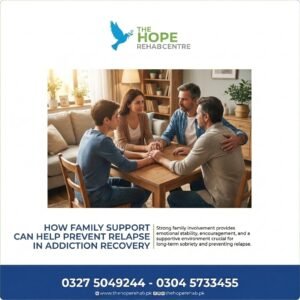
Family members and friends can support recovery by encouraging progress, respecting the individual’s efforts, and avoiding shame or criticism.
It may help to create smoke-free shared spaces, agree on practical forms of support, and recognize milestones without placing unrealistic pressure on the person quitting.
Support is particularly valuable during periods of stress or when cravings become difficult to manage.
Smoking Addiction Support at The Hope Rehabilitation Center Islamabad, Pakistan
The Hope Rehabilitation Center Islamabad, Pakistan, provides a setting for individuals and families seeking support for addiction-related concerns.
People who want to stop smoking can discuss their nicotine use, previous quit attempts, withdrawal symptoms, and treatment preferences with an appropriate healthcare professional. This can help determine whether counseling, nicotine replacement, prescription medication, or another form of support may be suitable.
Treatment should be individualized, with progress reviewed and the plan adjusted when necessary.
Frequently Asked Questions
1. Is nicotine addictive?
Yes. Nicotine can cause physical dependence and cravings, making it difficult to stop using tobacco or other nicotine-containing products.
2. How long do nicotine withdrawal symptoms last?
Symptoms often begin within hours of quitting, are commonly strongest during the first few days, and usually improve over several weeks. Cravings triggered by habits or situations may recur for longer.
3. What is the most effective way to quit smoking?
Behavioral support combined with an appropriate cessation medicine can improve the chances of success. The most suitable approach depends on individual health, nicotine use, and preferences.
4. Can smoking addiction be treated without medication?
Yes. Some people quit with counseling, behavioral strategies, and social support. Others benefit from medication or nicotine replacement therapy. A healthcare professional can help evaluate the options.
5. Is relapse common when quitting smoking?
Some people return to smoking during a quit attempt. This does not mean quitting is impossible. Reviewing triggers, strengthening support, and adjusting treatment can help with future attempts.
Conclusion
Nicotine and smoking addiction can be challenging, but effective treatment options are available. Understanding withdrawal, recognizing personal triggers, and combining practical coping strategies with appropriate professional support can make quitting more manageable.
Whether someone is preparing for a first quit attempt or trying again after returning to smoking, progress is possible. For individuals in Islamabad, seeking guidance from a qualified healthcare professional is a constructive step toward reducing nicotine dependence and improving long-term health.