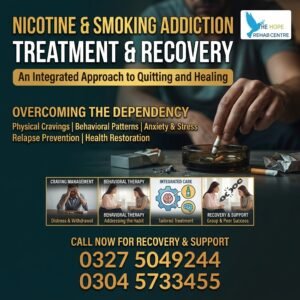
Smoking addiction is one of the most common forms of substance dependence worldwide. Many people begin smoking out of curiosity, stress, social influence, or habit, but over time it can become a strong physical and psychological addiction. The addictive substance in cigarettes, nicotine, affects the brain quickly, making it difficult for many individuals to quit without support.
Smoking addiction does not only affect the smoker; it can also impact family members and loved ones through secondhand smoke and emotional stress. At The Hope Rehabilitation Center Islamabad, Pakistan, individuals struggling with nicotine dependence can receive structured guidance, counseling, and behavioral support to help them work toward a healthier lifestyle.
Understanding smoking addiction is the first step toward making informed decisions about recovery.
What Is Smoking Addiction?
Smoking addiction is a condition where the body and mind become dependent on nicotine. Nicotine stimulates the release of chemicals in the brain, creating temporary feelings of relaxation, pleasure, or alertness.
Over time, the brain begins to rely on nicotine, which can lead to cravings and withdrawal symptoms when smoking stops. This cycle makes quitting challenging for many people.
Smoking addiction can involve:
- Cigarettes
- Vape devices
- Tobacco products
- Nicotine pouches
- Shisha or hookah
While the forms may differ, the addictive pattern often remains the same.
Signs of Nicotine Dependence
Smoking addiction may become stronger over time. Some common signs include:
- Strong cravings to smoke
- Difficulty going a few hours without nicotine
- Smoking immediately after waking up
- Increased smoking during stress
- Failed attempts to quit
- Irritability when unable to smoke
These signs often show that both physical and psychological dependence have developed.
Health Risks of Smoking Addiction
Smoking affects nearly every organ in the body. Long-term tobacco use can increase the risk of serious health problems.
Physical Health Risks
Smoking may contribute to:
- Lung disease
- Breathing difficulties
- Heart disease
- High blood pressure
- Reduced immune function
- Chronic cough
Mental and Emotional Effects
Although some people smoke to reduce stress, nicotine can actually increase anxiety and emotional dependency over time.
Many smokers report:
- Irritability
- Mood swings
- Difficulty focusing without smoking
- Stress-related smoking patterns
At The Hope Rehabilitation Center Islamabad, Pakistan, treatment focuses on both the physical habit and emotional triggers behind smoking addiction.
Why Is Quitting Smoking So Difficult?

Nicotine changes how the brain responds to stress, pleasure, and routine. Over time, smoking becomes linked to everyday activities like drinking tea, socializing, or managing tension.
When someone tries to quit, withdrawal symptoms may appear, such as:
- Cravings
- Restlessness
- Anxiety
- Difficulty sleeping
- Headaches
- Trouble concentrating
These symptoms can make quitting feel overwhelming, but they are often temporary and manageable with proper support.
Treatment Options for Smoking Addiction
Recovery from smoking addiction often involves a combination of behavioral support and structured treatment.
Behavioral Therapy
Therapy helps individuals identify triggers and replace smoking habits with healthier coping methods.
This may include:
- Stress management
- Trigger awareness
- Habit replacement strategies
- Emotional regulation techniques
Counseling and Emotional Support
One-on-one counseling can help individuals understand the emotional side of addiction and stay motivated during the quitting process.
At The Hope Rehabilitation Center Islamabad, Pakistan, counseling is designed to support both mental and behavioral change.
Relapse Prevention Planning
Quitting smoking is not just about stopping—it is also about staying smoke-free. Relapse prevention focuses on long-term strategies for maintaining progress.
Benefits of Quitting Smoking
The body begins to recover soon after smoking stops. Over time, many positive changes can happen, including:
- Improved breathing
- Better energy levels
- Healthier lungs
- Improved circulation
- Reduced coughing
- Better sleep quality
- Lower long-term health risks
Quitting smoking can also improve emotional health, financial stability, and family well-being.
The Role of Family Support
Family encouragement can make a meaningful difference during recovery. Loved ones can help by:
- Offering emotional support
- Reducing smoking triggers at home
- Encouraging healthy habits
- Celebrating progress
At The Hope Rehabilitation Center Islamabad, Pakistan, family involvement may be encouraged when appropriate to strengthen recovery support.
Frequently Asked Questions (FAQs)
1. Is smoking addiction a serious condition?
Yes. Smoking addiction can affect both physical and mental health and may become harder to manage over time.
2. Why is nicotine addictive?
Nicotine changes brain chemistry and creates cravings, making it difficult to stop once dependence develops.
3. Can therapy help with quitting smoking?
Yes. Behavioral therapy and counseling can help manage triggers and build healthier habits.
4. How long do nicotine withdrawal symptoms last?
Withdrawal symptoms vary, but many improve over days to weeks depending on the individual.
5. Is relapse common when quitting smoking?
Relapse can happen, but it does not mean failure. Continued support and treatment can help individuals stay on track.
Conclusion
Smoking addiction is a challenging condition that affects physical health, emotional well-being, and daily life. While quitting can be difficult, recovery is possible with the right guidance, structure, and support.
At The Hope Rehabilitation Center Islamabad, Pakistan, smoking addiction treatment focuses on understanding nicotine dependence, managing withdrawal, and building healthier routines. Through counseling, behavioral therapy, and long-term support, individuals can take meaningful steps toward a smoke-free and healthier future.