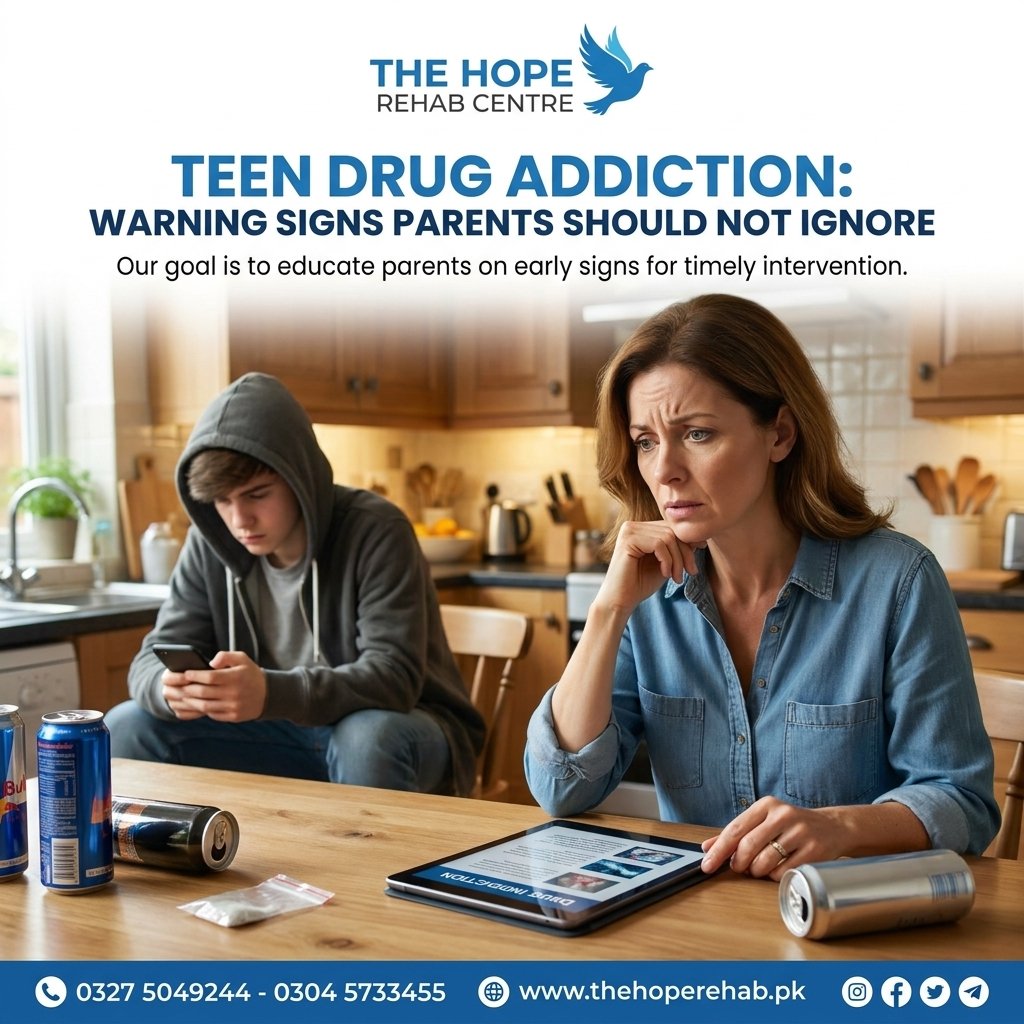
Teen drug addiction can be difficult for parents to recognize. Adolescence naturally brings changes in mood, behavior, friendships, sleep, and independence, so not every change means a young person is using drugs. However, a pattern of significant changes—especially when several warning signs appear together—deserves attention.
Early recognition can give families an opportunity to seek professional guidance before substance use becomes more serious. The Hope Rehabilitation Center Islamabad, Pakistan can be considered by families seeking professional support for addiction and related concerns.
Parents should approach suspected substance use with concern rather than shame or punishment. Teenagers may already feel frightened, embarrassed, or defensive, and a calm conversation can make it easier for them to discuss what is happening.
What Is Teen Drug Addiction?
Teen drug addiction refers to problematic substance use during adolescence that can involve loss of control, cravings, continued use despite harmful consequences, or difficulty stopping.
Young people may experiment with substances for different reasons, including peer pressure, curiosity, emotional distress, trauma, social influences, or attempts to cope with difficult feelings.
Not every instance of experimentation means a teenager has an addiction. A professional assessment can help determine the level of concern and the appropriate response.
Why Early Warning Signs Matter
Adolescence is an important period of physical, emotional, and social development. Regular drug use can interfere with school, relationships, decision-making, emotional well-being, and physical health.
Early support may also help identify underlying issues contributing to substance use, such as anxiety, depression, bullying, family conflict, trauma, or other mental health concerns.
Parents do not need to wait until a teenager experiences a major crisis before seeking advice.
Sudden Changes in Behavior
One potential warning sign is a noticeable and persistent change in behavior.
Parents may observe:
- Increased secrecy
- Unexplained irritability or anger
- Withdrawal from family activities
- Sudden changes in friends
- Loss of interest in previously enjoyed activities
- Unusual defensiveness
- Frequent requests for money
- Changes in personal habits or appearance
These signs can have many explanations. They become more concerning when they occur alongside other changes.
Changes in School Performance
Substance use can sometimes affect concentration, motivation, memory, attendance, and academic performance.
Warning signs may include:
- Falling grades
- Missing classes
- Frequent lateness
- Loss of interest in school
- Disciplinary problems
- Difficulty concentrating
- Abandoning extracurricular activities
Academic difficulties can also result from mental health problems, learning difficulties, bullying, family stress, or other issues. Parents should avoid assuming drugs are the cause without further assessment.
Physical and Health-Related Signs
Different substances produce different effects, so there is no single physical symptom that confirms drug use.
Depending on the substance, parents might notice changes such as:
- Unusual sleep patterns
- Changes in appetite
- Poor coordination
- Tremors
- Bloodshot eyes
- Unexplained physical complaints
- Significant weight changes
- Neglect of personal hygiene
Some symptoms may also result from normal adolescent development or medical conditions. Professional evaluation can help clarify the situation.
Emotional and Mental Health Changes
Teen drug use may occur alongside mental health concerns.
Parents should pay attention to persistent:
- Anxiety
- Sadness
- Irritability
- Mood swings
- Social withdrawal
- Suspiciousness
- Changes in sleep
- Loss of motivation
Some substances can also worsen psychological symptoms or contribute to paranoia, hallucinations, or severe agitation.
If a teenager appears disconnected from reality, becomes dangerously agitated, or may harm themselves or someone else, urgent professional help is necessary.
Changes in Friendships and Social Life
A sudden change in a teenager’s social circle isn’t automatically a sign of drug use. Adolescents naturally develop new friendships.
However, concern may increase when changes occur alongside secrecy, unexplained absences, declining school performance, or other behavioral changes.
Parents should focus on understanding what is happening rather than criticizing their child’s friends.
Finding Drug-Related Items
Certain items may raise concerns depending on the substance involved. These might include unfamiliar pills, drug packaging, smoking materials, or other paraphernalia.
However, an item alone doesn’t establish addiction. Parents should avoid making accusations without understanding the situation.
If there is a genuine concern, professional advice can help determine the next appropriate step.
How Parents Should Respond
A parent’s response can influence whether a teenager feels safe seeking help.
Helpful approaches include:
- Choose a calm and private time to talk.
- Express concern without making accusations.
- Listen before giving advice.
- Ask open-ended questions.
- Avoid humiliation or threats.
- Explain the health and safety concerns clearly.
- Encourage professional assessment when appropriate.
Parents should remember that addiction is a health concern, not simply a matter of bad behavior or weak character.
When Professional Help May Be Needed
Professional support should be considered when substance use appears repeated, difficult to control, or connected with significant problems at home, school, or socially.
Additional concerns include repeated attempts to stop using without success, strong cravings, risky behavior, withdrawal symptoms, or continuing substance use despite obvious harm.
A professional assessment can help determine whether the teenager needs counseling, family support, addiction treatment, mental health care, or another level of intervention.
Teen Addiction Treatment and Family Support
Treatment for adolescents should be appropriate for their age and developmental needs. Depending on the assessment, support may involve individual counseling, behavioral interventions, family therapy, mental health care, education, and ongoing monitoring.
Family involvement can be especially important. Parents may need guidance on communication, boundaries, supervision, and supporting recovery without enabling harmful behavior.
Treatment should also consider school, friendships, emotional health, and other factors affecting the young person’s life.
The Hope Rehabilitation Center Islamabad, Pakistan
The Hope Rehabilitation Center Islamabad, Pakistan provides a setting for individuals and families seeking support for addiction and related concerns.
Families worried about teen drug use should seek an appropriate professional assessment rather than relying solely on internet information or attempting to diagnose the teenager themselves.
The earlier a concerning pattern is recognized, the sooner a family can explore appropriate support.
Frequently Asked Questions
1. How can I tell if my teenager is using drugs?
There is no single sign that confirms drug use. A combination of persistent behavioral, academic, physical, emotional, and social changes may warrant professional assessment.
2. Should I punish my teenager if I suspect drug use?
Punishment alone may not address the underlying problem. A calm conversation, clear boundaries, safety planning, and appropriate professional support can be more constructive.
3. Does experimenting with drugs mean my teenager is addicted?
No. Experimentation and addiction are not the same. However, repeated use, cravings, loss of control, and continued use despite harm can indicate a substance use disorder.
4. Can mental health problems contribute to teen drug use?
Yes. Some teenagers may use substances in an attempt to cope with anxiety, depression, trauma, stress, or other emotional difficulties. A professional assessment can identify possible co-occurring concerns.
5. When should parents seek urgent help?
Urgent help is needed if a teenager has a suspected overdose, severe confusion, loss of consciousness, difficulty breathing, seizures, severe psychosis, or an immediate risk of self-harm or harm to others.
Conclusion
Recognizing Teen drug addiction early can be challenging, but parents should not ignore a persistent pattern of concerning changes. Falling grades, secrecy, social withdrawal, mood changes, unusual behavior, and physical symptoms can have many causes, but together they may justify professional assessment.
Parents can play an important role by responding with compassion, maintaining appropriate boundaries, and seeking qualified support when needed. At The Hope Rehabilitation Center Islamabad, Pakistan, families can explore professional guidance for addiction and related mental health concerns while working toward an individualized path to recovery.