The Hope Rehab Center

Category A Fresh Start Is a New Life

Best Drug Rehabilitation Centre in Pakistan: How to Choose the Right One

Best Drug Rehabilitation Centre in Pakistan: How to Choose the Right One

Finding the Best Drug Rehabilitation Centre in Pakistan can be an important decision for individuals and families dealing with substance use. With different treatment programs and levels of care available, choosing a facility should involve more than looking at advertisements or making a decision based on a single claim.

A suitable rehabilitation centre should provide appropriate professional support, individualized care, a safe environment, and a recovery plan that continues beyond the initial treatment period. Families should also consider whether the centre can address both substance use and related mental health concerns.

Understanding Drug Rehabilitation

Drug rehabilitation is a structured process designed to help people address problematic substance use and develop healthier ways of managing everyday life. Treatment may involve medical assessment, detoxification, counseling, behavioral therapy, family education, and aftercare.

Different drugs can create different health and withdrawal risks. Heroin, methamphetamine, cannabis, prescription medicines, and other substances may therefore require different treatment approaches.

Rehabilitation should be based on the individual’s substance use history, physical health, psychological needs, and social circumstances.

Why Choosing the Right Rehab Centre Matters

The right treatment setting can make it easier for an individual to receive consistent support and work on the underlying factors associated with addiction.

When comparing rehabilitation centres, families should look for clear information about:

  • Treatment methods
  • Staff qualifications
  • Medical supervision
  • Counseling services
  • Mental health assessment
  • Family involvement
  • Relapse prevention
  • Aftercare planning
  • Privacy and safety procedures

A responsible centre should explain its services clearly rather than making unrealistic promises about recovery.

Check the Treatment Approach

One of the most important factors is the type of treatment provided.

Medical Assessment and Detoxification

A professional assessment should generally take place before treatment begins. It can identify medical conditions, substance use patterns, withdrawal risks, and other factors that may affect care.

Detoxification may be appropriate for some individuals, but detox alone isn’t a complete addiction treatment. Certain substances, particularly alcohol and benzodiazepines, can produce potentially dangerous withdrawal symptoms and may require medical supervision.

Counseling and Behavioral Therapy

Counseling can help individuals understand triggers, manage cravings, improve coping skills, and address behaviors connected to substance use.

Behavioral therapies can also support healthier decision-making and relapse-prevention skills. Treatment should be adjusted according to the individual’s needs rather than following a rigid program for everyone.

Mental Health Support

Substance use and mental health conditions can occur together. Depression, anxiety, trauma, and other psychological concerns may influence substance use or become worse alongside it.

A suitable rehabilitation centre should recognize these possibilities and provide appropriate assessment or referral when additional mental health care is needed.

Look for Individualized Treatment Plans
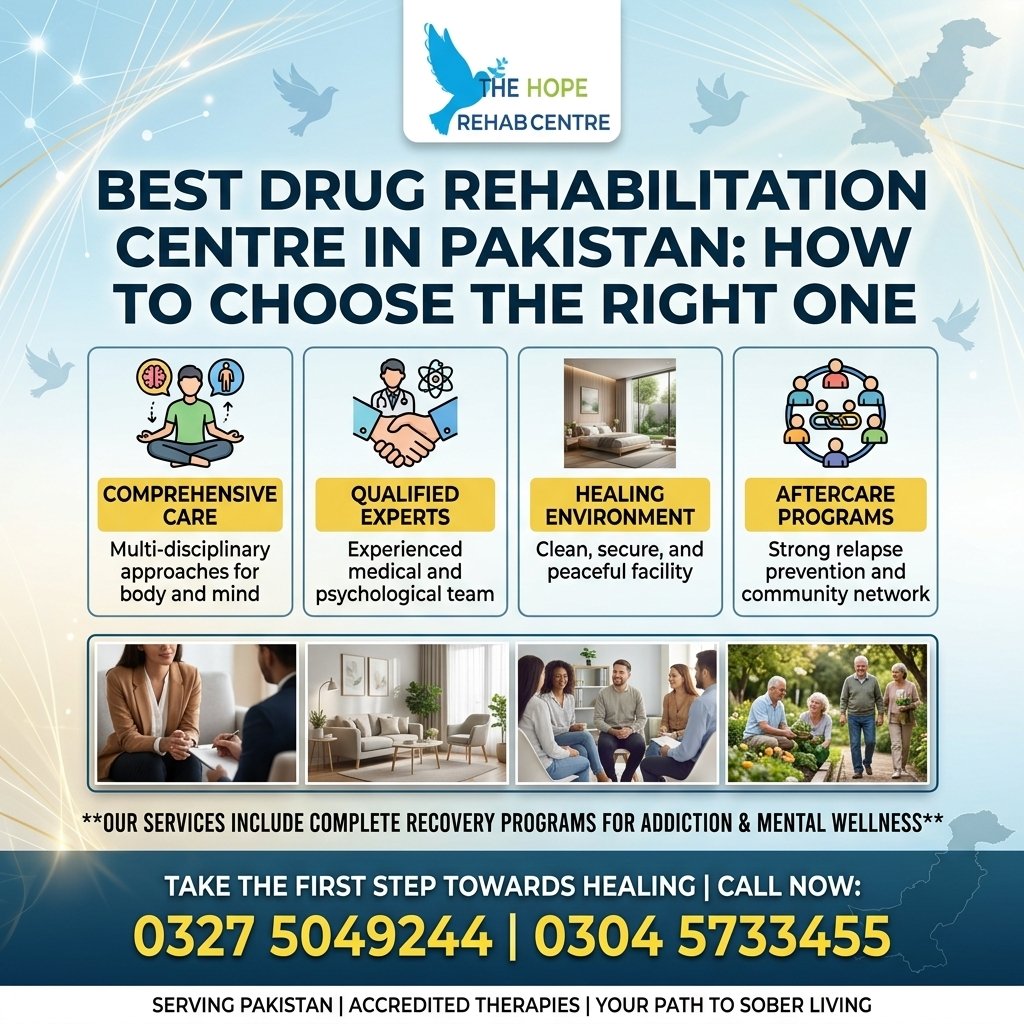
Best Drug Rehabilitation Centre in Pakistan: How to Choose the Right One

Every person’s recovery journey is different. Age, substance use history, physical health, mental health, family circumstances, and previous treatment experiences can all influence the appropriate plan.

An individualized program may include different combinations of medical care, counseling, behavioral therapy, family support, and aftercare.

Be cautious of facilities that present one treatment method as suitable for every person or guarantee a particular outcome.

Consider the Qualifications of the Care Team

The qualifications and experience of the professionals providing care are important considerations.

Families can ask whether the centre has appropriately trained healthcare professionals, counselors, psychologists, or other specialists relevant to the services being offered.

It’s also reasonable to ask who supervises medical treatment and how emergencies are handled. Clear answers can help families make a more informed decision.

Ask About Family Support

Addiction affects more than the individual using substances. Family members may experience stress, confusion, financial difficulties, and relationship problems.

Family education and counseling can help relatives understand addiction, communicate more effectively, establish healthy boundaries, and support recovery without unintentionally enabling harmful behavior.

Review Relapse Prevention and Aftercare

A rehabilitation program shouldn’t focus only on the initial treatment period. Recovery continues after a person returns to everyday life.

Ask whether the centre provides an aftercare or relapse-prevention plan. This may include continuing counseling, follow-up appointments, peer support, family involvement, and strategies for managing triggers.

Relapse can occur and doesn’t necessarily mean that treatment has failed. A good recovery plan should provide a way to reassess treatment and strengthen support when difficulties arise.

Consider the Environment and Level of Care

The treatment environment should provide appropriate privacy, safety, structure, and dignity. Families should understand whether the program is residential, outpatient, or another level of care.

The appropriate setting depends on clinical needs. Someone with significant medical or psychiatric concerns may require a different level of supervision than someone receiving ongoing outpatient counseling.

Questions to Ask Before Choosing a Rehab Centre

Before selecting a facility, consider asking:

  1. What assessment is completed before treatment?
  2. Who provides medical and psychological care?
  3. How are withdrawal symptoms managed?
  4. What counseling and behavioral therapies are available?
  5. How are co-occurring mental health concerns addressed?
  6. Is family education or counseling available?
  7. What happens after the initial treatment program?
  8. How does the centre respond if a person experiences a relapse?
  9. What level of care is appropriate for the individual’s condition?

These questions can help families compare services based on quality and suitability rather than marketing language.

The Hope Rehabilitation Center Islamabad, Pakistan

The Hope Rehabilitation Center Islamabad, Pakistan is a rehabilitation facility serving individuals and families affected by substance use and related challenges. When considering any rehabilitation service, the focus should remain on appropriate assessment, individualized care, professional support, and long-term recovery planning.

Families researching treatment options can use these same principles when evaluating The Hope Rehabilitation Center or any other rehabilitation provider. The most suitable choice depends on the individual’s specific health and recovery needs.

Frequently Asked Questions

1. What should I look for in the best drug rehabilitation centre in Pakistan?

Look for qualified professionals, appropriate medical assessment, evidence-informed treatment, individualized care, mental health support, family involvement, relapse prevention, and aftercare.

2. Is residential rehab better than outpatient treatment?

Neither is automatically better for everyone. The appropriate level of care depends on the person’s substance use, health, withdrawal risks, home environment, and clinical needs.

3. How important is medical supervision during addiction treatment?

It can be very important, particularly when withdrawal may involve significant medical risks or when a person has other health conditions or uses multiple substances.

4. Does detoxification cure drug addiction?

No. Detox addresses the physical process of stopping substance use but doesn’t necessarily address cravings, behavioral patterns, mental health concerns, or social factors. Continuing treatment is often important.

5. What role does aftercare play in recovery?

Aftercare provides ongoing support after the initial treatment period. It can help individuals manage triggers, maintain healthy routines, recognize warning signs, and seek additional help when needed.

Conclusion

Choosing the Best Drug Rehabilitation Centre in Pakistan should be based on the quality, suitability, and safety of the treatment rather than promotional claims. Families should examine the centre’s treatment approach, professional qualifications, medical support, mental health services, family involvement, and aftercare planning.

Addiction is a complex health condition, and recovery doesn’t follow one identical path for everyone. A thoughtful assessment and individualized treatment plan can provide a stronger foundation for meaningful, long-term recovery.
Hopelessness Is a Sin: Understanding the Spiritual and Emotional Weight of Despair

Hopelessness Is a Sin: Understanding the Spiritual and Emotional Weight of Despair

Hopelessness is a heavy emotional state that can make a person feel lost, empty, and disconnected from life. It often appears during difficult times—when pain feels endless, when prayers seem unanswered, or when life becomes overwhelming. Many people ask whether hopelessness is simply a feeling or something deeper.

From a spiritual perspective, hopelessness is often seen as dangerous because it can distance a person from faith, purpose, and trust in God. In many religious teachings, despair is discouraged because it can weaken the belief that healing, mercy, and change are still possible.

However, it is important to understand the difference between feeling hopeless and choosing to live in hopelessness.

Hopelessness as a Human Emotion

Every person experiences moments of sadness, pain, and uncertainty. Feeling hopeless during hardship does not make someone weak or sinful. It is part of being human. Loss, trauma, addiction, depression, and emotional pain can create intense feelings of despair.

What matters is how a person responds to those feelings.

When hopelessness becomes permanent in the mind, it can lead to isolation, depression, and harmful decisions. That is why emotional support, faith, and professional help are so important.

Spiritual Meaning of Hopelessness

Many faith traditions teach that God’s mercy, guidance, and help are always present—even when unseen. Losing all hope can sometimes reflect losing trust in that mercy.

In Islamic teachings, despairing completely of Allah’s mercy is strongly discouraged. The Qur’an repeatedly reminds believers that hardship is temporary and that relief can come after struggle.

Hopelessness becomes spiritually harmful when a person believes:

  • Things can never improve
  • Forgiveness is impossible
  • Recovery is out of reach
  • Their life has no value

These thoughts can trap a person in darkness.

The Connection Between Hopelessness and Mental Health

Hopelessness Is a Sin: Understanding the Spiritual and Emotional Weight of Despair

Hopelessness is also closely connected to mental health conditions like depression, anxiety, trauma, and addiction. Sometimes people do not feel hopeless because of weak faith—they feel hopeless because they are emotionally exhausted.

This is why mental health support matters.

At The Hope Rehabilitation Center Islamabad, Pakistan, individuals struggling with depression, addiction, and emotional trauma receive structured care designed to help them rebuild emotional strength and regain hope.

Professional treatment can help people understand that hopelessness is often a symptom, not a permanent truth.

How to Fight Hopelessness

Overcoming hopelessness often takes both spiritual and practical steps:

1. Speak to Someone

Keeping pain inside can make hopelessness stronger. Talking to a trusted person, therapist, or counselor can provide relief.

2. Reconnect with Faith

Prayer, reflection, and spiritual connection can help restore inner peace and perspective.

3. Focus on Small Steps

Recovery and healing do not happen overnight. Small progress still matters.

4. Seek Professional Help

If hopelessness is linked with depression, addiction, or trauma, professional support may be necessary.

At The Hope Rehabilitation Center Islamabad, Pakistan, mental health and addiction recovery programs help individuals rebuild confidence, emotional balance, and hope.

Final Thoughts

Hopelessness is not something to ignore. While it can be a painful emotional experience, living in complete despair can damage both mental health and spiritual well-being. The key is to remember that no hardship lasts forever.

Healing is possible. Forgiveness is possible. Recovery is possible.

Even in the darkest moments, hope remains one of the strongest forces a person can hold onto. Sometimes the first step toward healing is simply believing that a better day can still come.

A Fresh Start Is a New Life – A fresh start is a new life in Islamabad, Pakistan

A Fresh Start Is a New Life – A fresh start is a new life in Islamabad, Pakistan

But when you face addiction, emotional struggles, mental stress or a tough personal circumstance everything in life can feel so unbearable. Nevertheless, we must agree that everyone has a right to heal, rebuild and have a shot at the road of recovery. A Fresh Start New Life in Islamabad, Pakistan: A new start represents optimism, rehabilitation, and a desire for real change.

With understanding, professional care, and emotional support at The Hope Rehabilitation Center Islamabad, Pakistan recovery is pursued. Be it Fabric Dependence, Obsessions of Insecurities, Emotional Burnout, or other forms of adjustment disorder; the best way is to take that first step from where we can lead you towards a well-founded and content life.

What Fresh Start Means to Me

A new beginning means breaking bad habits, moving away from toxic environments or an unhealthy lifestyle that may cause physical or emotional harm. For some this might be recovery from addiction, for others it may be mental health treatment, or healing from emotional trauma and for still others it will probably involve changing lifestyle issues.

A fresh start may support people to:

  • Restore confidence
  • Improve emotional balance
  • Rebuild damaged relationships
  • Create healthier routines
  • Develop positive coping skills
  • Focus on long-term personal growth

Recovery is not about perfection. Consistency means moving forward on the path of a better life and more fulfilling future.

Why People Need a Fresh Start

It can take a toll on mental, emotional and physical health. The hopelessness or emotional exhaustion created during addiction, stress or trauma due to family conflict and social pressure may lead you into boredom, confusion, rage; all of this can be yours.

the most common reasons why people want a clean slate are as follows:

  • Drug or alcohol addiction
  • Mental health struggles
  • Anxiety and depression
  • Relationship problems
  • Emotional trauma
  • Chronic stress
  • Loss of motivation or direction

Asking for help is often not a weakness at all, but rather a sign of strength. Support offered early on may stop emotional difficulties developing into more severe problems.

Recovery and Mental Health

There is a strong link between mental health and addiction. Most people suffering from substance abuse have also other emotional issues such as panic attack, low self-esteem, anxiety or depression.

A professional recovery setting might have:

  • Emotional support
  • Behavioral therapy
  • Stress management techniques
  • Counseling sessions
  • Mental wellness programs
  • Relapse prevention strategies

The Hope Rehabilitation Center Islamabad, Pakistan based treatment programs that also center on emotional inner peace and long-term recovery assistance.

Healthy habits aid in building a new life

Working on forming healthier habits is a key component in rebuilding your life following addiction or emotional problems. Routines organized positively could manifest better physical health, emotional well-being as well as mental clarity.

Helpful habits include:

Regular Physical Activity

Exercise can help relieve stress, work on your mood, and possibly promote emotional well-being.

A Fresh Start Is a New Life – A fresh start is a new life in Islamabad, Pakistan

Balanced Nutrition

Healthy Eating Will Make You Energetic and Healthy.

Proper Sleep

Those with sound sleep patterns tend to have lower anxiety and emotional fatigue levels.

Mindfulness and Relaxation

Stress Management with breathing exercises and MEDITATION!

Social Support

Strengthening emotional recovery comes with having healthy relationships alongside supportive communities.

Step-by-step behaviors like these can help people sustain order and self-assurance on the way of recovery.

The Importance of Emotional Healing

A recovery is not just physical. Long term wellness also requires emotional healing. So many people bear emotional trauma whether its trauma, addiction, stress or a tough time in their life.

Emotional healing may involve:

  • Individual counseling
  • Group therapy
  • Family support sessions
  • Stress management education
  • Self-awareness development

Through this process of addressing emotional challenges, people can learn to have more awareness around what triggers them and how they need to respond in a healthier way.

Family Support During Recovery

There is a heavy reliance on family support for those who want to change — for good. Encouragement, empathy, and reinforcing open lines of communication with your spouse can have a positive outcome on emotional dependency and drive.

Families can support recovery by:

  • Encouraging treatment participation
  • Avoiding blame or criticism
  • Substance Abuse & Mental Health Training
  • Supporting healthy lifestyle changes
  • Providing emotional encouragement

A stable home can make individuals feel more secure and comfortable when recovering.

But it does mean overcoming challenges with a fresh start

It’s not always easy to start over. Recovery is unique for the individual, and many experience relapses, emotional distress or fear of failure. But conflict can also bring the power of growth and resilience.

Common recovery challenges include:

  • Cravings or relapse triggers
  • Anxiety and emotional stress
  • Social pressure
  • Self-doubt
  • Fear of change

Others suggest that professional support and formalized recovery programs may aid people in recovering from these challenges more effectively.

Building a Positive Future

Because a second chance is how you build a clean-life balanced future. Recovery is usually a slow process, where one must devote time consistently to be able to rely on their emotional resources.

Positive recovery goals may include:

  • Returning to education or work
  • Restoring family relationships
  • Improving mental health
  • Developing healthy routines
  • Building confidence and self-respect

Each small step you take towards healing helps to overall grow and build your emotional wellness.

How Professional Rehabilitation Support Can Help

This is where the role of professional treatment programs may help to set a safe, supportive space for those suffering from addiction or distress.

Recovery services at The Hope Rehabilitation Center Islamabad, Pakistan may include:

  • Medical support
  • Psychological counseling
  • Mental health care
  • Detoxification support
  • Relapse prevention programs
  • Family counseling

Personalized care enables people to be devoting attention to cure whilst studying more healthy approaches to cope.

FAQs

1.     What does Fresh Start is a New Beginning mean?

It’s about progress and making changes for the better by letting go of what is unhealthy, surrounding yourself with a recovering environment that promotes healing and growth.

2.     Benefits of emotional healing during recovery?

Emotional Recovery aids those who are dealing with chronic anxiety, trauma, stress, and other mental health challenges that may act as a contributing factor to potential addiction or psychological distress.

3.     And, does family support help in enhancing recovery?

Yes, supportive family relationships often help individuals feel encouraged, understood, and motivated during recovery.

4.     Other habits that help you stay sober for a long time?

These may well assist in stability and wellness regular physical activity balanced diet have enough sleep managing the concerns productive assistance.

5.     When recovering, why is professional support necessary?

Guiding each AA program are treatment services, emotional care, counseling as well as even more organized recovery that offers long-standing results.

Conclusion

Is the departure of a A fresh start new life in Islamabad Pakistan, Hope, Healing and Positive Change Anyone who is walking the road to recovery from addiction, emotional distress or mental health issues will find that this first step toward change may one day lead them to a better life and more healthy future.

Compassionate care and structured recovery programs at The Hope Rehabilitation Center Islamabad, Pakistan, work together to guide individuals through the entire healing process. However, with emotional support, professional guidance and motivation, a person can start creating a life characterized by stability, purpose and beliefs.